Weathering a crisis: Volunteers help town gear up for emergencies
“If we have a significant storm that impacts the area, we know what setting up the shelter is like now.”
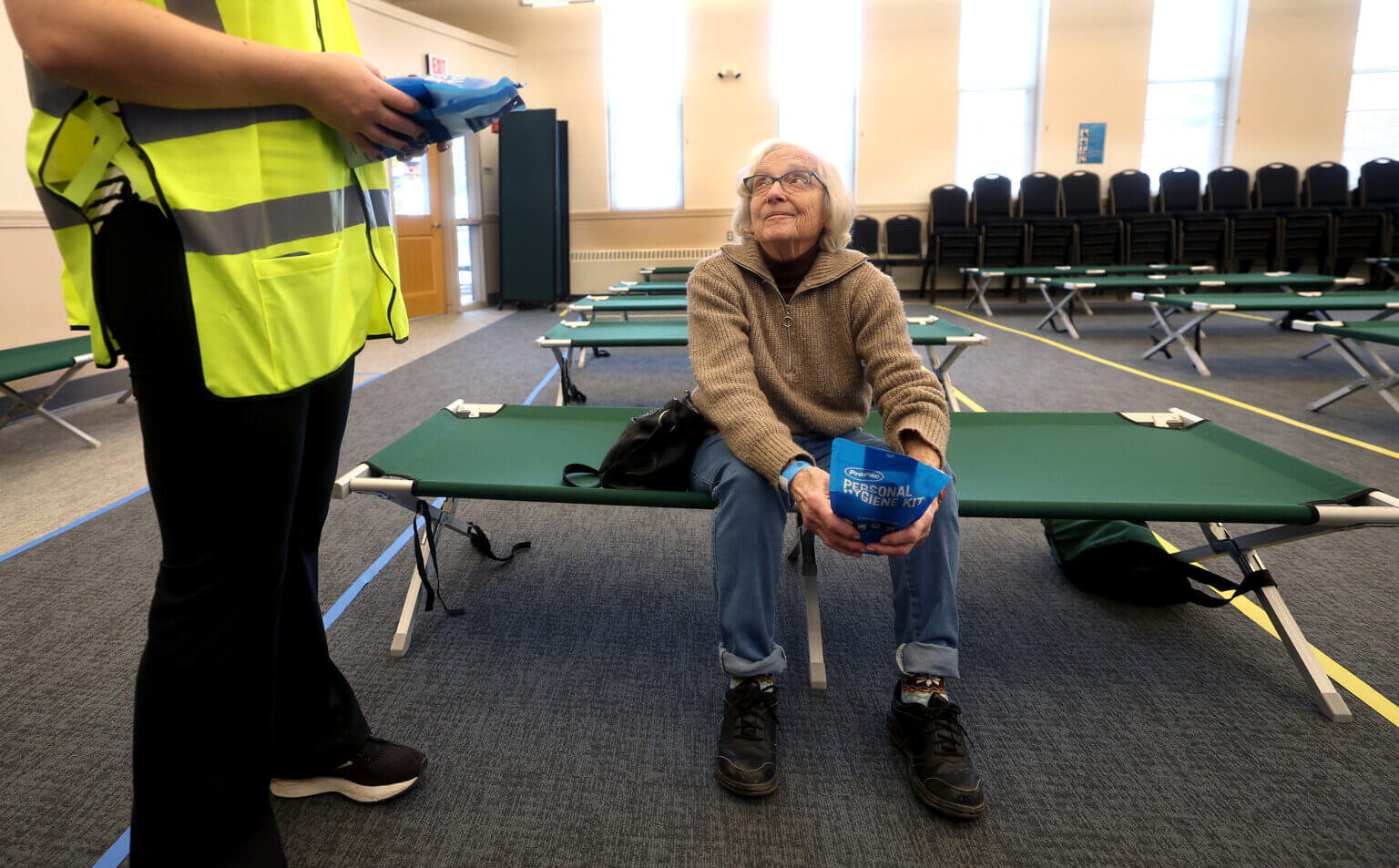
Green cots lined the floor of Harvey Wheeler Community Center, and workers in bright yellow or blue vests hustled from one screening station to the next, ready to help people seeking safety in a crisis.
February 20 marked the first time Acton had practiced its emergency shelter plan since 2013, and Assistant Fire Chief Walter Latta said the exercise was long overdue.
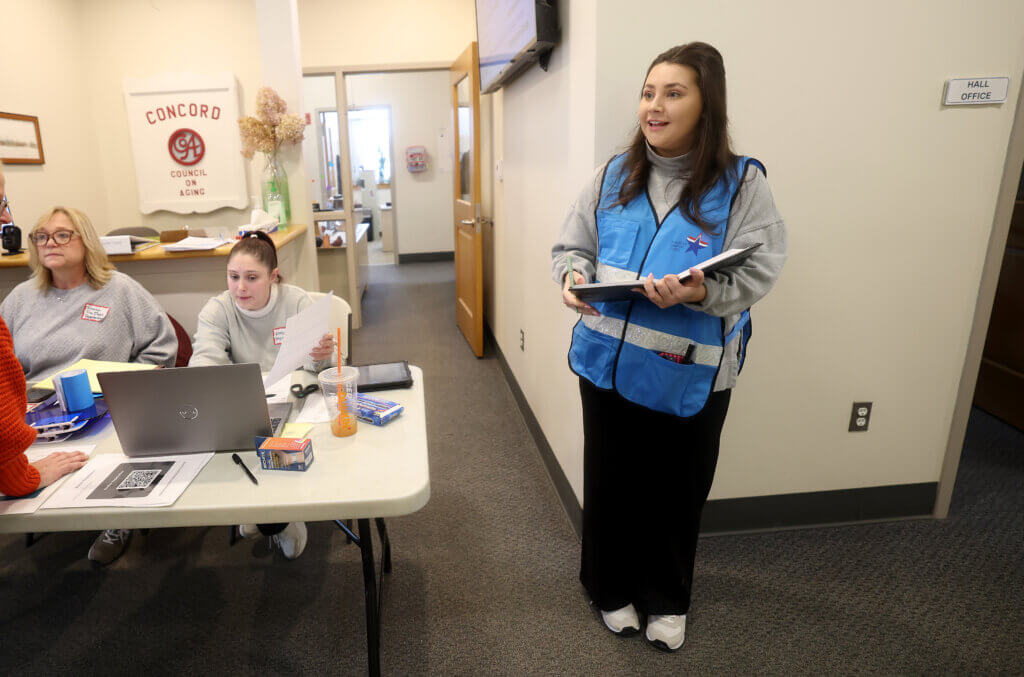
“Climate change and weather patterns can affect anywhere, and we need to be prepared for it,” Latta said. “What we wanted to do is just put us through the paces. If we have a significant storm that impacts the area, we know what setting up the shelter is like now.”
Fire Department Capt. Peter Ostroskey said that afterward while the shelter wasn’t needed during last Monday’s major snowstorm, it was great preparation.
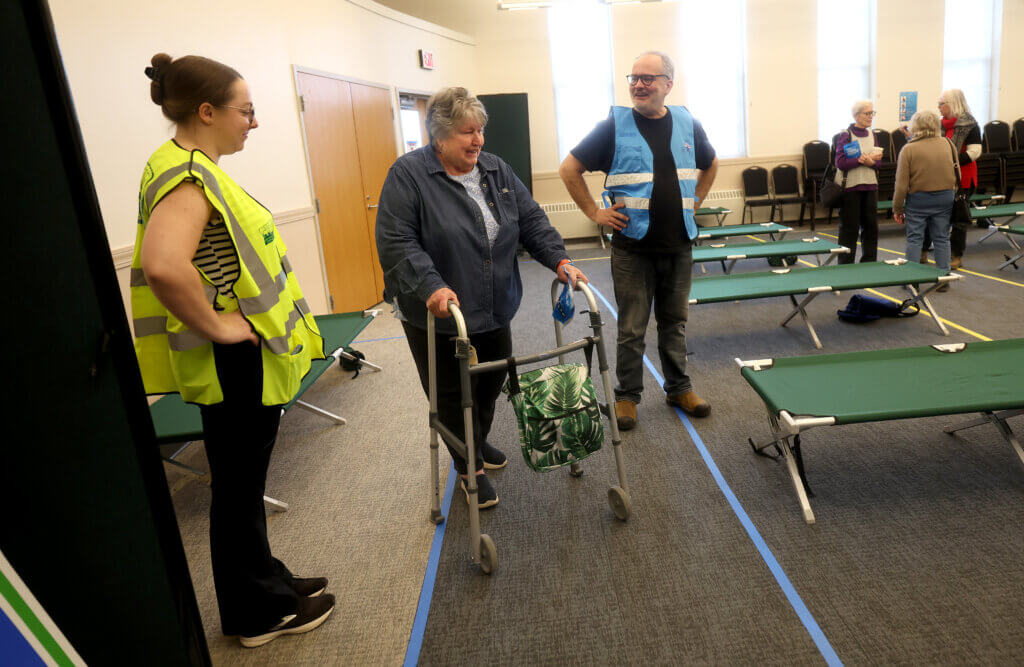
Residents volunteered to play the part of shelter seekers. One, Betty Knake, said she frequently helps out at the Council on Aging, housed in the Harvey Wheeler Community Center, and she wanted to help on that day, too.
“They were looking for volunteers, and I went and said to them, ‘Do you want somebody as old as me?’” Knake said. “And they said ‘yeah,’ so here I am.”
The shelter required coordination among multiple departments. Fire, police, the Board of Health, human resources, and counseling staff all participated, alongside volunteers like Knake.
From check-in to check-out
When the drill began, volunteers checked in as if they were arriving during a real emergency. Staff asked whether they had allergies, pets, or special needs, and recorded the information just as they would in a true calamity.
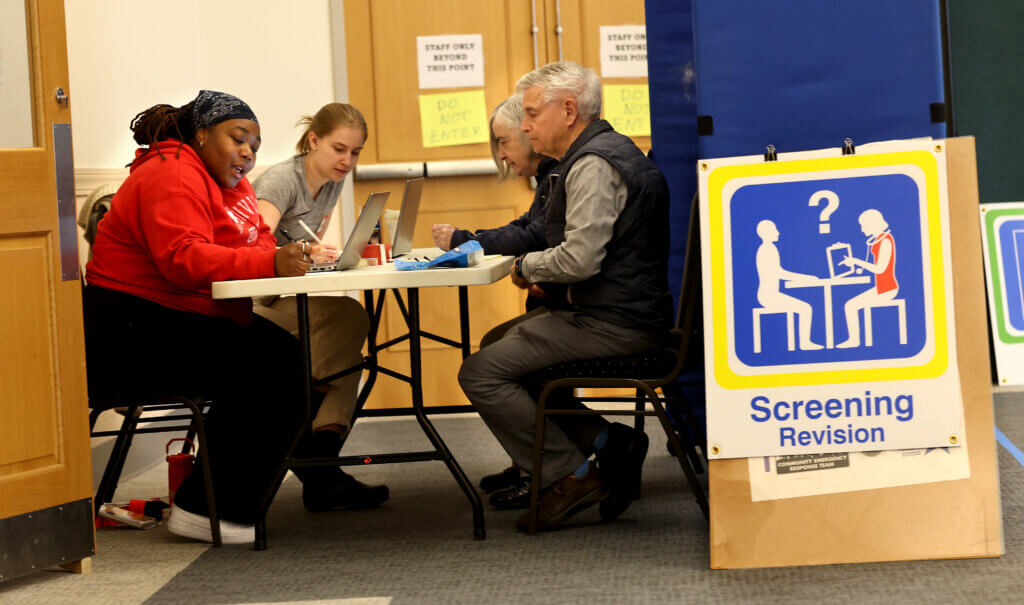
From there, volunteers were guided deeper into the building for a medical screening. Some raised the stakes: Finance Committee Clerk Karlen Reed, there as a volunteer, told staff her arm was broken.
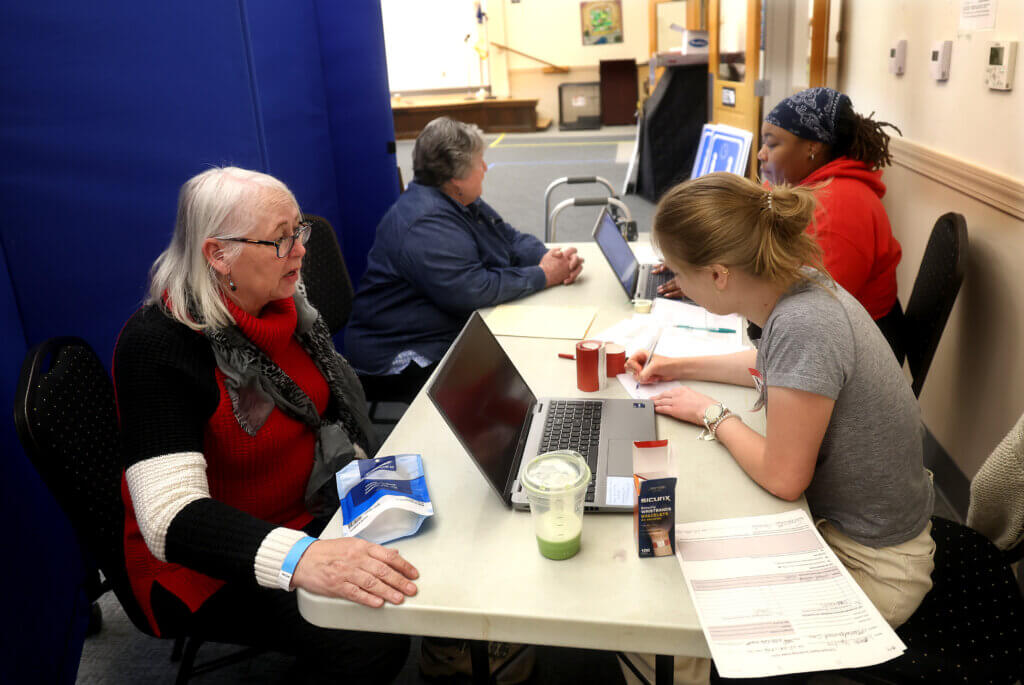
After the screening, volunteers were assigned cots and given bags containing toothpaste, shampoo, and other toiletries.
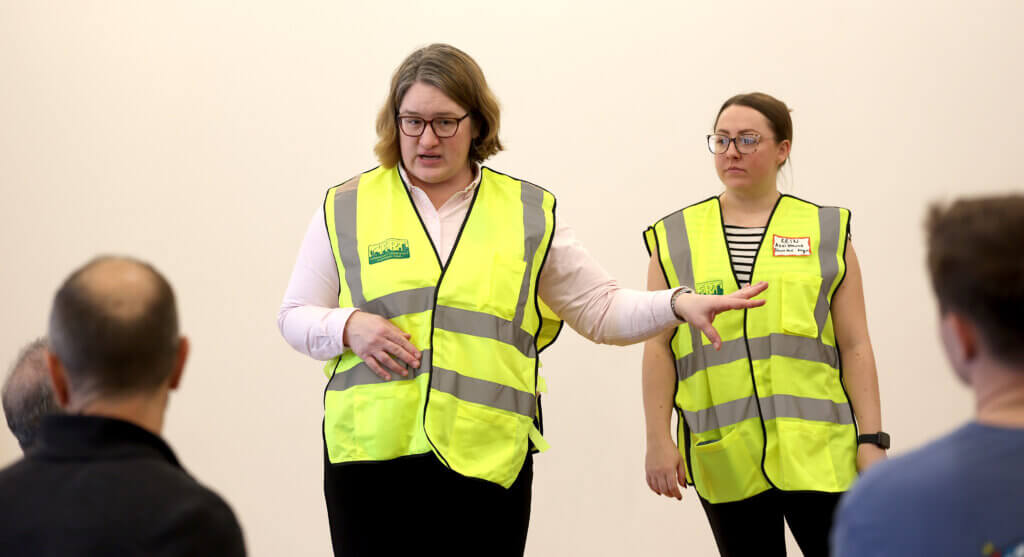
Town Public Health Director Melanie Dineen, who played the role of shelter lead during the training, said it was a success despite some hiccups.
“The biggest thing was that we didn’t check people out” when they left, she said, “but that’s what this is for — to see what needs to be done in a real emergency.”
Readiness begins at home
Dineen said the Health Department will spend the coming months helping residents understand how they can ready themselves for an emergency at home.
“We can get as prepared as we can here,” she said, “but individuals can also prepare.”
Latta said that starts with making a simple list of essentials in case evacuation becomes necessary.
“If you were to go to a shelter for a night or two, are you going to need your CPAP? Your medicine? Maybe you need some comfort thing,” he said. “I love ChapStick, so if I am going to a shelter, I am bringing ChapStick.”
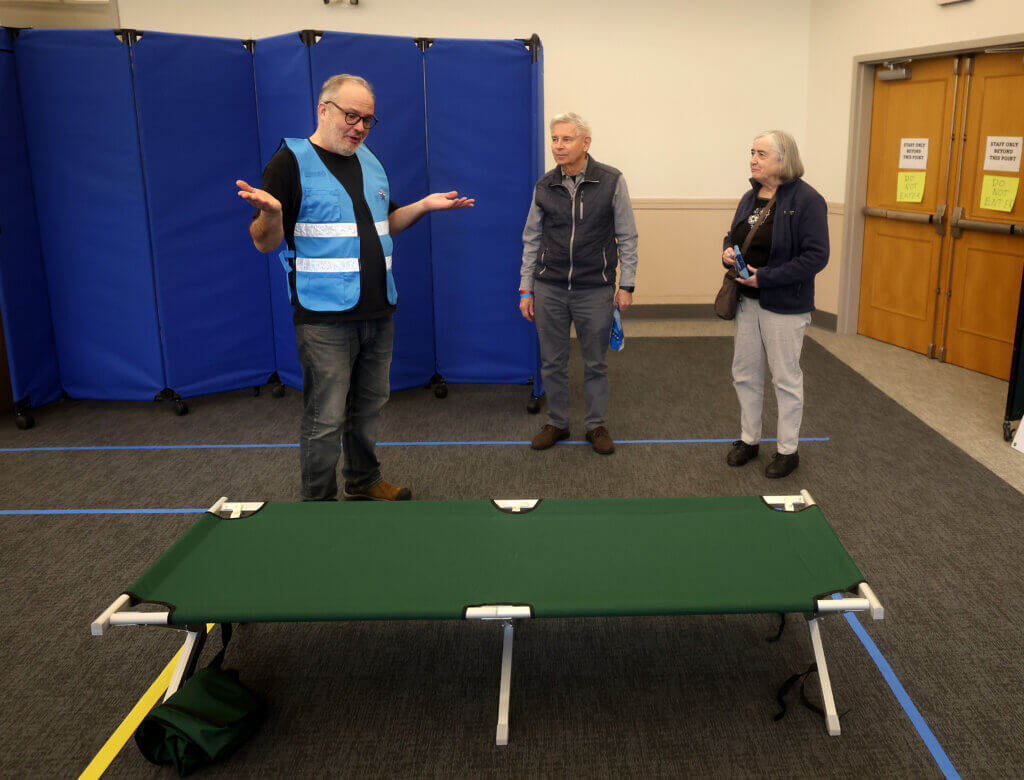
For volunteers Donald and Claire Moir, the drill underscored that message. “We didn’t know what to expect,” Donald said, but the takeaway was clear: “Make sure you bring your medication.”
Claire said seeing the preparations firsthand offered reassurance.
“There’s a little bit of comfort knowing that in the event of an emergency,” she said, “there’s at least a place that you can go.”


