With hands and herbicides, non-profits battle invasive river plants
Fast-growing European water chestnut plants form thick mats that can destabilize ecosystems and obstruct boats.
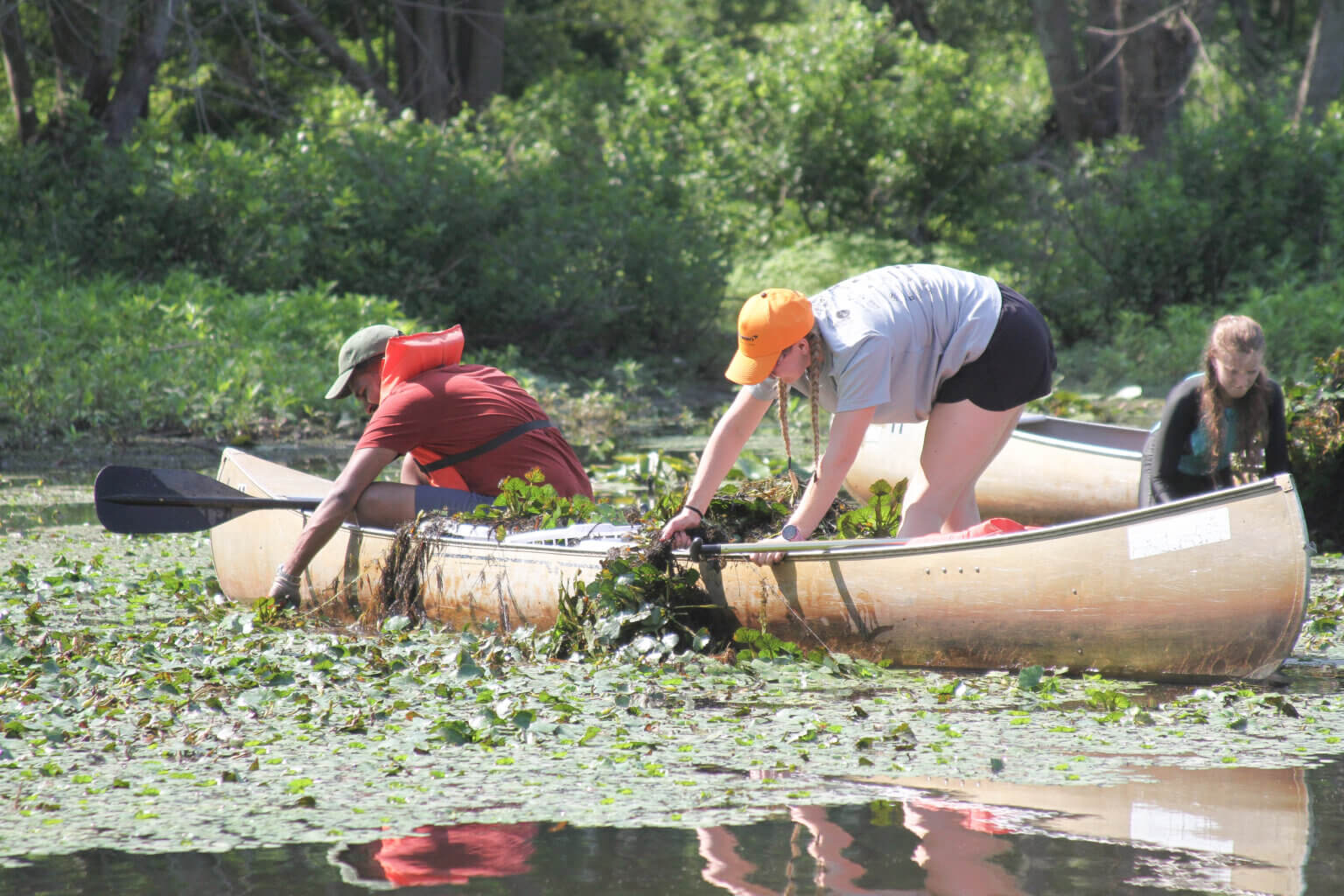
South Bridge Boat House manager Brianna Rohan gestured to a cove along the Sudbury River and said water lilies once made that spot “a sea of white.”
That day, a few flowers sprouted. Invasive plants choked the rest.
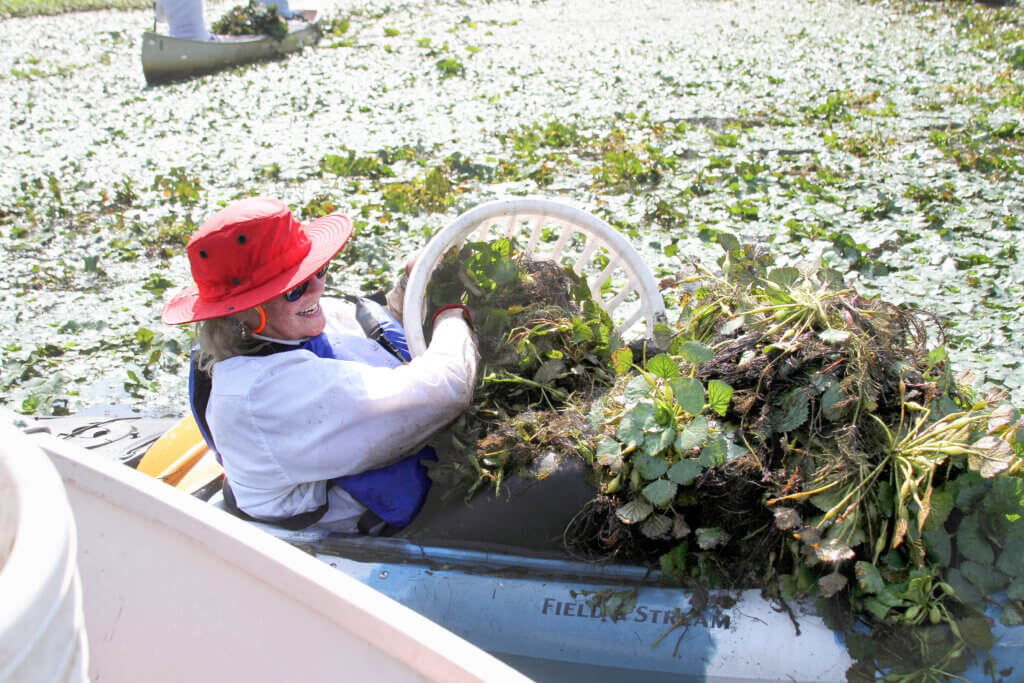
Rohan spoke from a small boat while more than two dozen volunteers pulled water chestnuts from the river. She said the plant problem is getting worse around her business. This recent day of hand-pulling was one battle in a larger war.
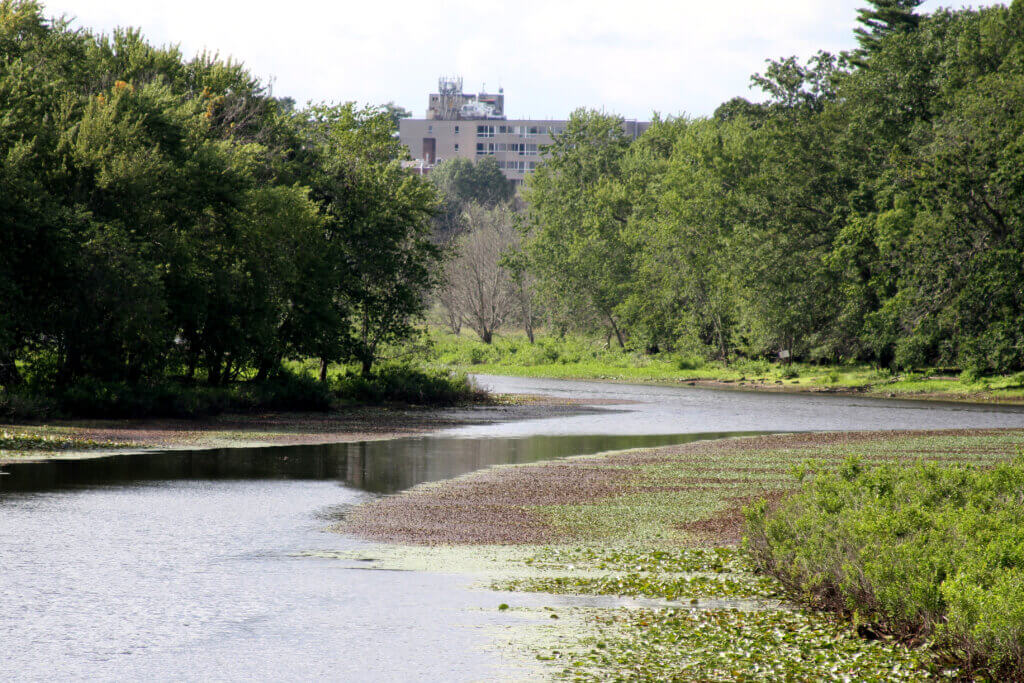
Chestnuts have crept downstream from Fairhaven Bay at the Acton/Lincoln line. Beyond hand-pulling, the Acton Land Conservation Trust is coordinating herbicide treatments.
“It’s gotten so bad,” said OARS board member Carolyn Gouchoe.
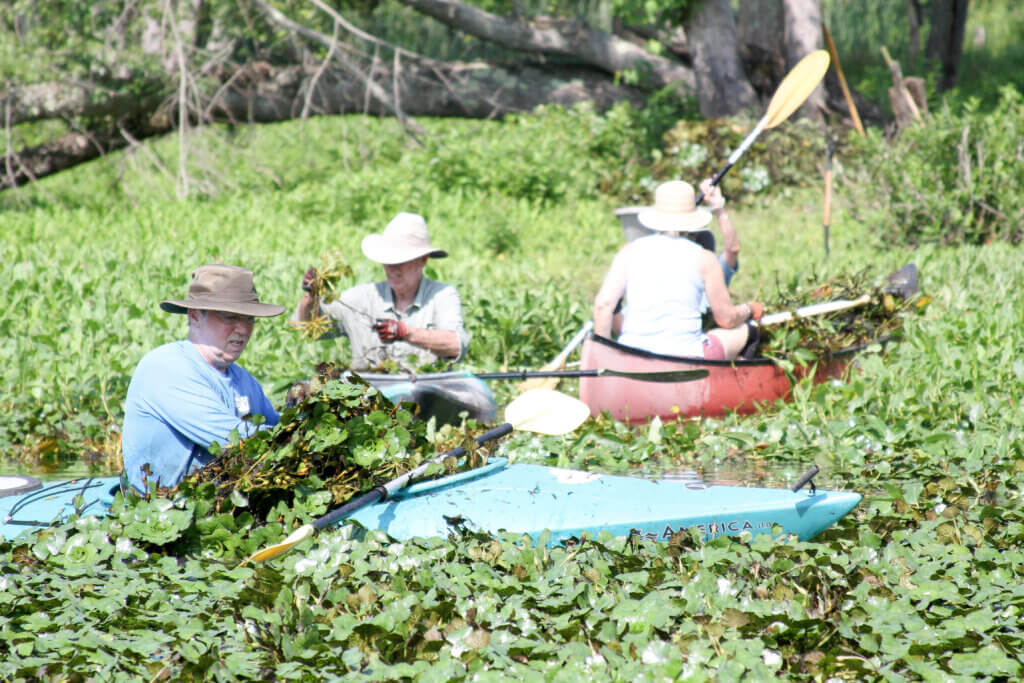
Water chestnuts
OARS is based in Acton and works to protect the Sudbury, Assabet, and Acton rivers.
The group organized the July 16 water chestnut pull near Rohan’s business. Rohan donated her time, canoes, paddles, and life jackets.
The European water chestnut arrived in the U.S. in the mid-1800s. The fast-growing plants form thick mats that can destabilize ecosystems and obstruct boats.
A 2024 OARS report said water chestnuts had shown up in the Assabet, Sudbury, and Acton rivers.
Rohan said customers often ask if these are the water chestnuts often used in Asian cooking. If that were the case, she said, “We wouldn’t have this problem because we’d have companies here harvesting them.”
Instead of a crunchy vegetable fit for stir-fries, the water chestnut plants in Acton produce sharp seed pods that, when dried, can poke through shoes, according to a town fact sheet.
Gouchoe lives along the Sudbury River and worries about otters who dive into and out of the water. Floating greenery, she said, “really affects them.” She also described bald eagles pulling fish from the river. Where chestnuts proliferate, the birds might struggle to hunt.
Gwen Acton also lives nearby and said she’s seen musk turtles crawl onto the riverbank to lay their eggs. She worries infestations will block the tiny reptiles.
A long battle
Efforts to control water chestnuts around Acton date back decades. In the Sudbury River, crews spent years using a mechanical harvester to clear Fairhaven Bay.
Land trust Executive Director Jane Gruba-Chevalier said efforts shifted north of Sudbury Road roughly three years ago, “because we noticed it was really starting to explode.”
Gruba-Chevalier said the harvester wasn’t feasible because water chestnuts are growing alongside invasive watermilfoil, which can spread through fragments after a harvester churns the water.
Experts organized hand-pulling. This year, the land trust turned to herbicide with a $15,000 grant from the SuAsCo Wild & Scenic River Stewardship Council.
Crews applied a product called Clearcast on the Sudbury River between Sudbury Road and Route 2 on July 15. Crews were scheduled to return for a second application this month.
State and federal regulators have reviewed the chemical in Clearcast, and Gruba-Chevalier said it’s safe for people and wildlife. (A safety data sheet from Clearcast’s distributor still warns the product could be dangerous to unborn children and cautions about harming plants and wildlife.)
Acton Natural Resources Director Delia Kaye said technicians have applied herbicides to local bodies of water over the years, including Warner’s Pond, Silver Hill Pond, Annursnac Hill Pond, Acton Greene ponds, and Nashawtuc Country Club. Groups also used Clearcast in nearby communities, including Sudbury and Framingham, according to the 2024 OARS report.
Compared with water chestnuts’ environmental impact, Rohan said she’s not worried about chemical treatments.
“This is the lesser evil,” she said.
A chance to help
Water chestnut seeds can stay viable for well over a decade. OARS officials said hand-pulling will be “essential to prevent regrowth” after herbicide treatment.
Asked if she expects future herbicide treatments on the Sudbury River, Gruba-Chevalier said land trust leaders will regroup after this year’s applications and determine their strategy for next summer.
In the meantime, volunteers on July 16 filled their boats with water chestnuts.
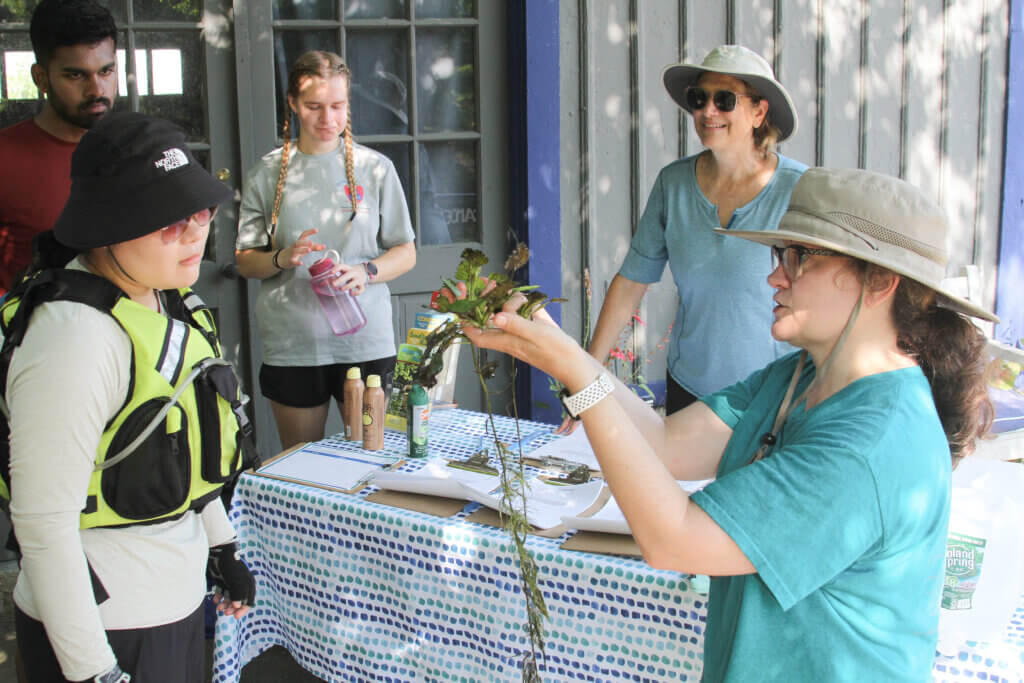
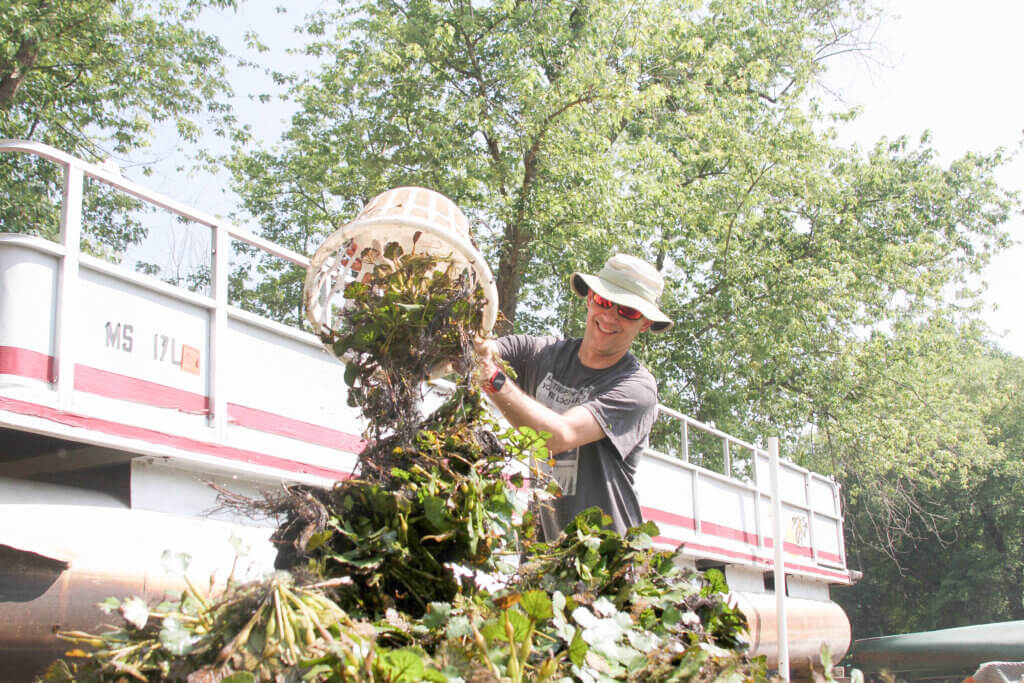
Back at the boathouse, Acton worked with other volunteers to take paddlers’ deliveries and dump plants in a pile.
Acton said she emailed her neighbors about the issue before the hand-pull event and received some responses saying, “This is so depressing.”
“I’m like ‘No, this is amazing that we can actually do something about it,’” she said.
An OARS spokesperson said the organization didn’t have more hand-pulling events scheduled in Acton this summer. People who want to get involved will still have opportunities as the fight continues.
“We will certainly be back at it next summer,” Gruba-Chevalier said in an email to The Acton Bridge.


