Author explores Acton’s multilayered religious past
Jim Sherblom has a clear objective: “I’m trying to change the narrative of how we think about Acton’s history.”
Acton’s centuries-long religious history has been a tapestry — from indigenous peoples’ shamans to Puritan pilgrims to the Transcendentalists and beyond.
So says retired Universalist Unitarian minister Jim Sherblom, theologian, author, entrepreneur, and Transcendentalist philosopher.
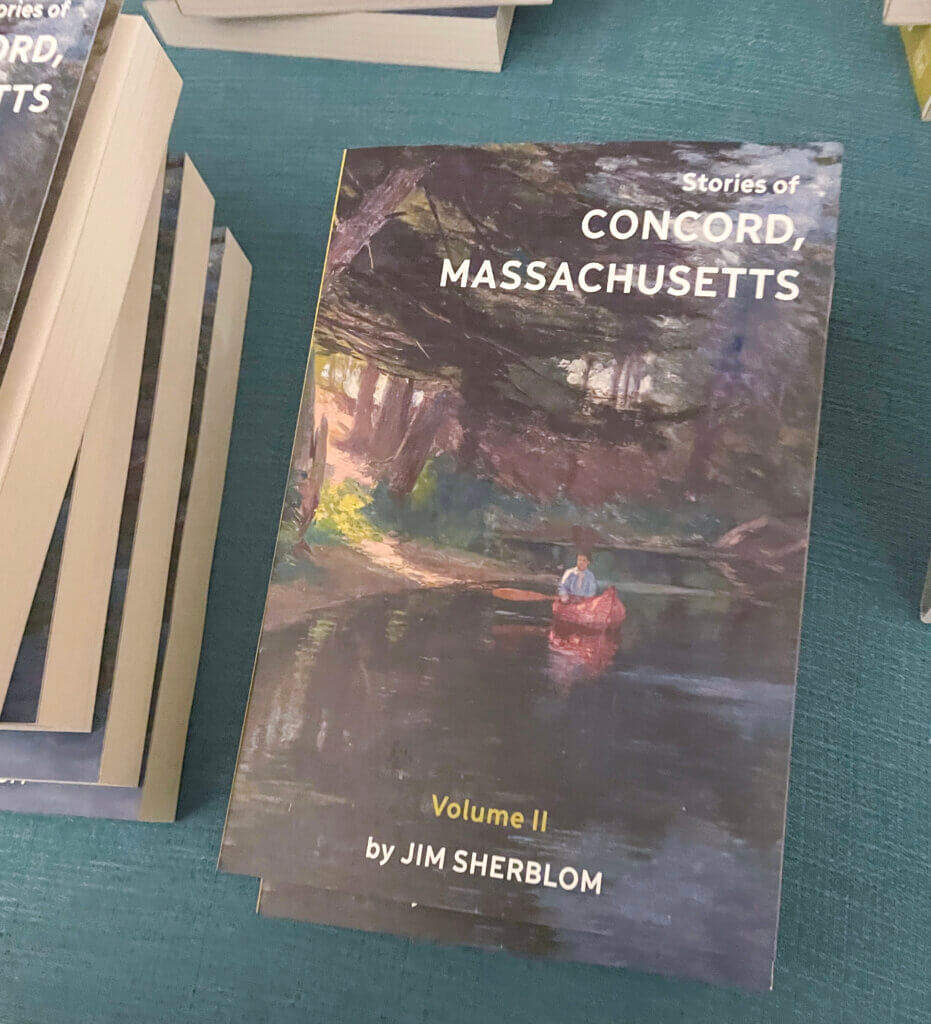
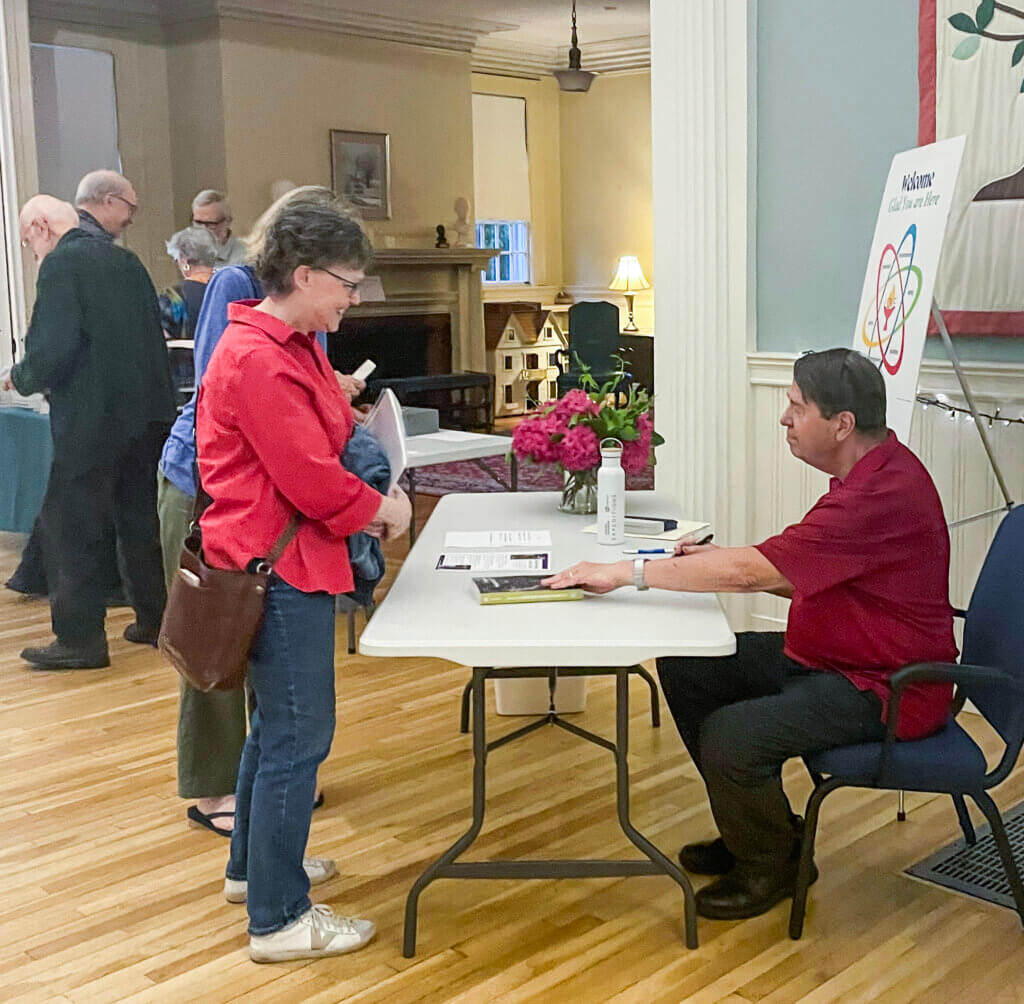
With his most recent book, “Stories of Acton, Massachusetts: Volume II,” he says he has a clear, if ambitious, objective: “I’m trying to change the narrative of how we think about Acton’s history.”
Sherblom tackles the town’s sometimes complicated relationship with subjects such as religious history, white supremacy, and the history of wealth.
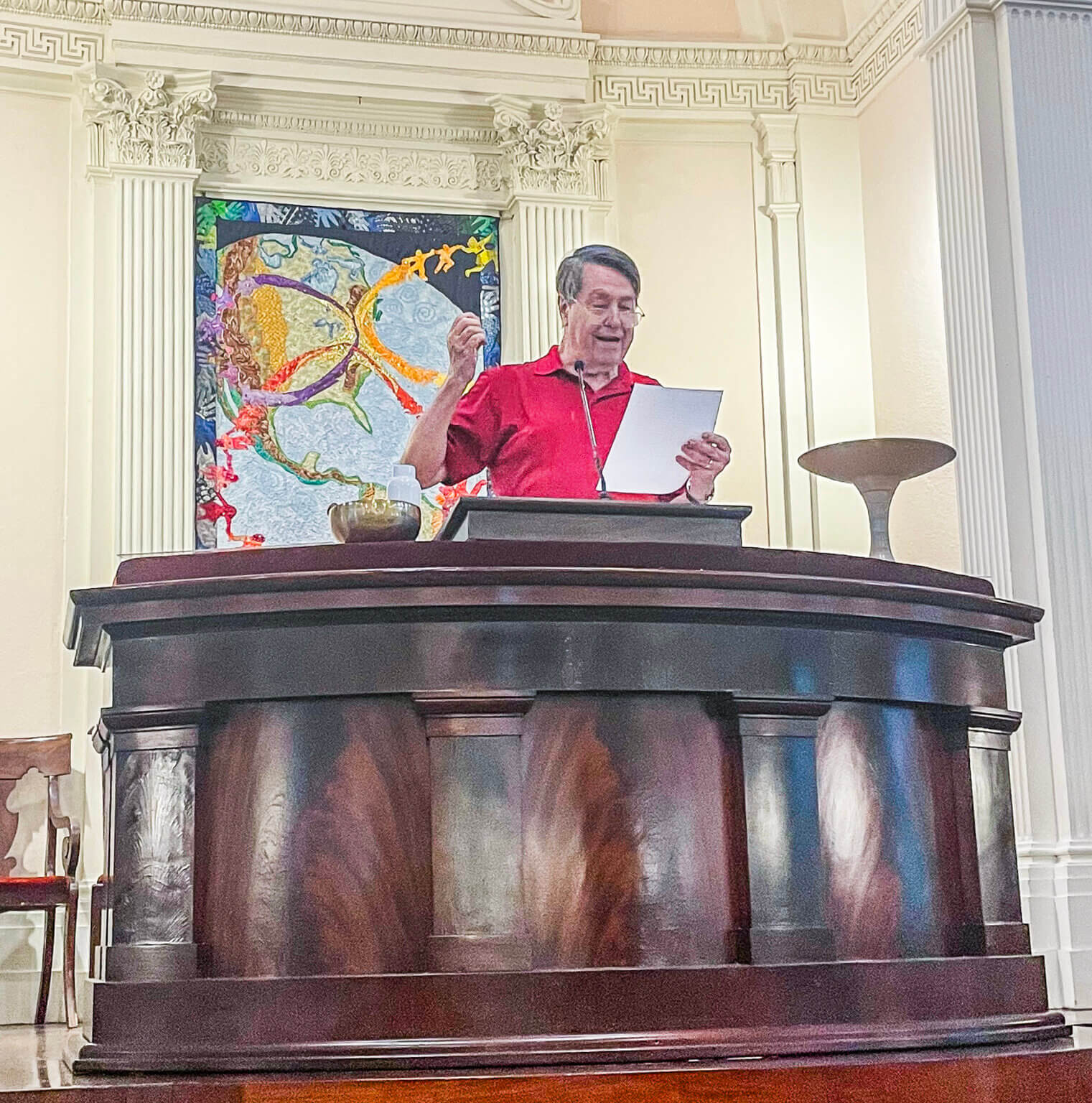
In a June 2 talk, Sherblom described how First Parish evolved to model support for America’s religious diversity.
The Native peoples who lived around the Musketaquid area for thousands of years had shamans who tended to the spiritual and health needs of their people, he said, but who could not protect them from diseases brought by white men. This undermined the Natives’ trust in their leaders and made Christianity more appealing.
A ‘radical sect’
The Puritans, a “radical sect within the Calvinist movement,” were themselves escaping persecution. These pilgrims grasped at religious freedom and available land on this side of the Atlantic.
Sherblom said the first ministers of Acton were professional, educated people who co-preached, intermarried, and tried to live more purely to earn their place in heaven, while supported by town taxes.
Generations of First Parish ministers served a continually changing demographic of worshipers in Acton, recognizing unique “Yankee Protestants,” different sects who had their own views on how to spend “holy time” and rituals of service.
By the 1760s, Acton also found political inspiration in Rev. William Emerson, who “preached American liberty and sedition in the pulpit,” Sherblom said. “He also advanced reason in religion over piety.”
A huge demographic change came with the building of the railroads as hundreds of Irish immigrant workers came to Acton with their families. Many stayed; for them, Sherblom said, “Acton was the promised land.”
St. Bernard’s, Trinitarian Congregational Church, West Acton’s Union Religious Society, the Trinity Episcopalian, and even the pragmatism of William James flourished over time.
‘A shaman’s experience’
For Sherblom, the rise of Transcendentalism in the 1830s was a profound chapter not only for Acton, but for all of humanity. He recited from Ralph Waldo Emerson’s account of crossing through the forest, “glad to the brink of fear … I become a transparent eyeball. … I am part and particle of God.”
Sherblom reads this “as a shaman’s experience … a human being getting in touch with their spiritual connection. This may be Acton’s greatest contribution to world religion.”
Sherblom detailed his own spiritual journey as one of 10 children of a Baptist minister. He excelled at Bible study, expecting to become his father’s spiritual heir. Instead he followed Emerson’s path, experiencing a Transcendental connection with nature and “having my heart opened to divine mystery.”
He traveled the world, spending time with mystics of many faiths, seeking God in all of them. Sherblom’s interactions with shamans of world religions led to his journey to Unitarian Universalism.
“We can’t plan our lives,” he said, “but we can choose how we respond.”
A turning point
Sherblom retired 10 years ago and began to suffer mysterious, challenging physical symptoms. He was diagnosed with Parkinson’s disease shortly thereafter and experienced significant degeneration, ultimately having to be lifted to the pulpit to preach. After more medical diagnosis, treatments, and spinal surgery, he began to regain strength and mobility.
“Parkinson’s led me to go back to my earlier training in history to do research, because I couldn’t physically be involved with the world as I’d previously been,” he told The Acton Bridge.
His books on Acton are concerned with “the stories [that] have always been out there but weren’t part of the narrative about who we are as Concordians.”
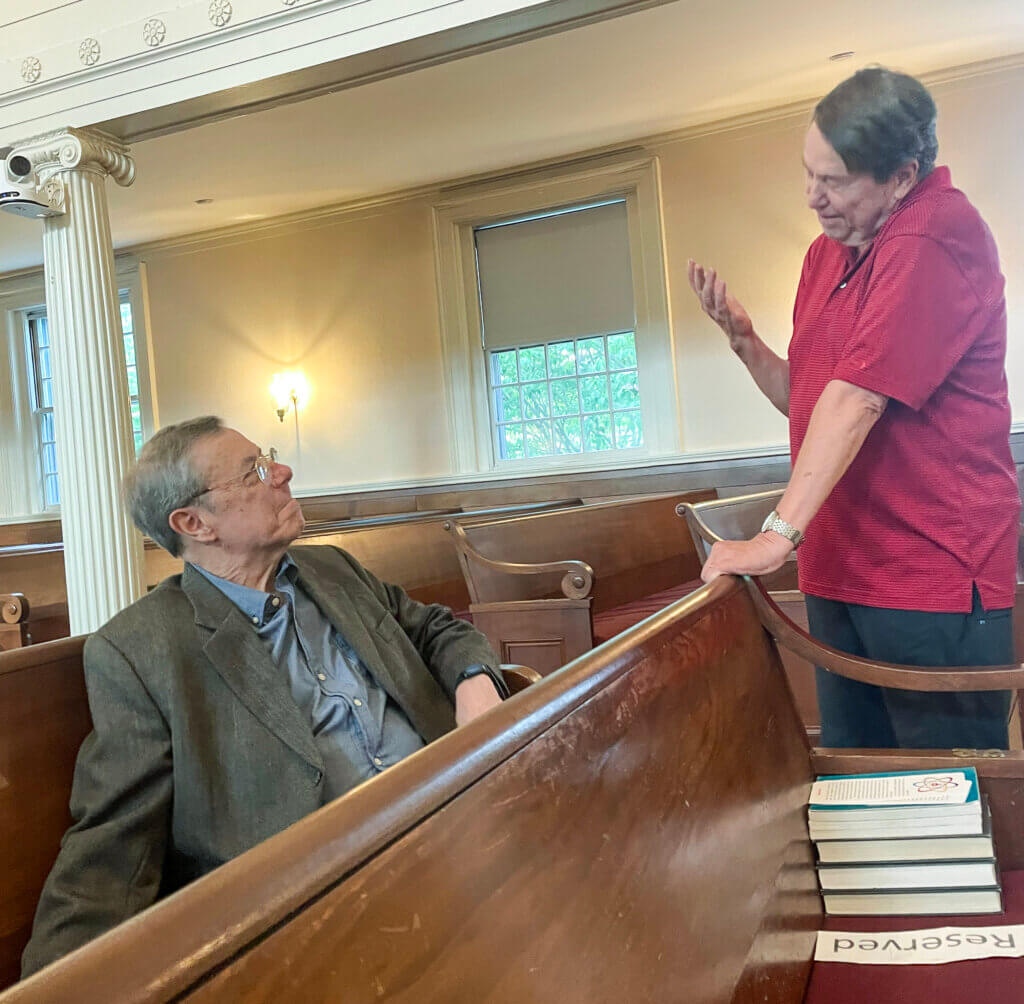
Sherblom said he’s on an odyssey to share a lifetime of thinking with his community, hoping “to help us figure out, especially in the current environment, how do we be respectful of each other and how do we create the community that Acton’s capable of creating. We’ve often been an exemplar to the country of what’s possible, and I still believe Acton is capable of being an exemplar.”