Acton author’s memoir explores caregiving, grief, resilience
Yuko Ninomiya Heberlein writes about resilience, self-discovery, and learning, after profound loss, how to live again.
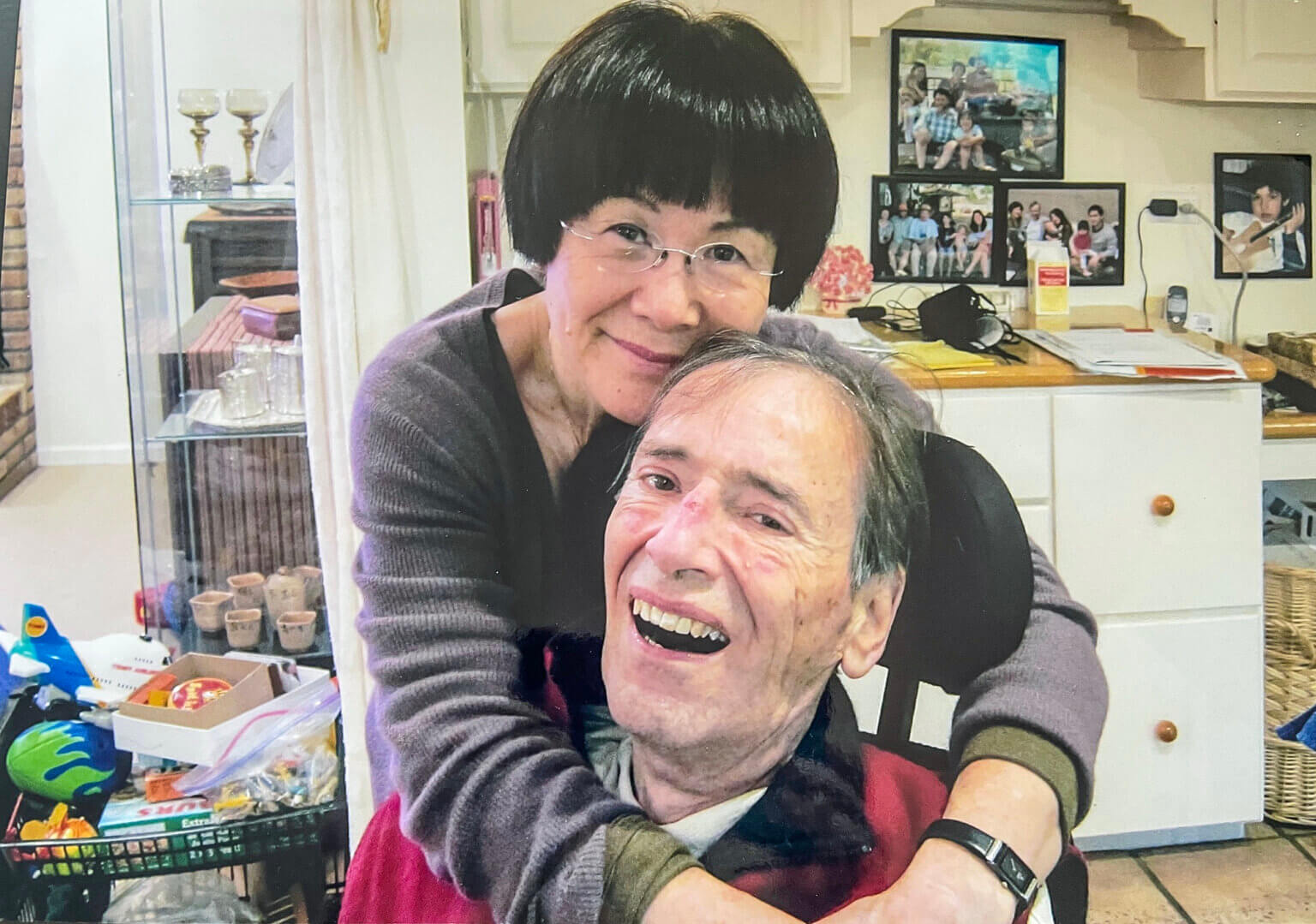
Yuko Ninomiya Heberlein grew up in postwar Japan, where food was scarce, families struggled to survive, and the traumas of Hiroshima and Nagasaki lingered.
Decades later, after building a joyful life in America with the man she loved, she found herself fighting another battle, this time against ALS as her husband’s primary caregiver.
Her new memoir, “Arc: Life Between Two Unwinnable Wars: WWII and ALS,” tells the story of those two battles. It’s a book not about tragedy, but about resilience, self-discovery, and learning, after profound loss, how to live again.
At 86, the Newbury Court resident speaks with the calm confidence of someone who has spent a lifetime making peace with life’s unpredictability.
“I had to make life work alone,” says Heberlein.
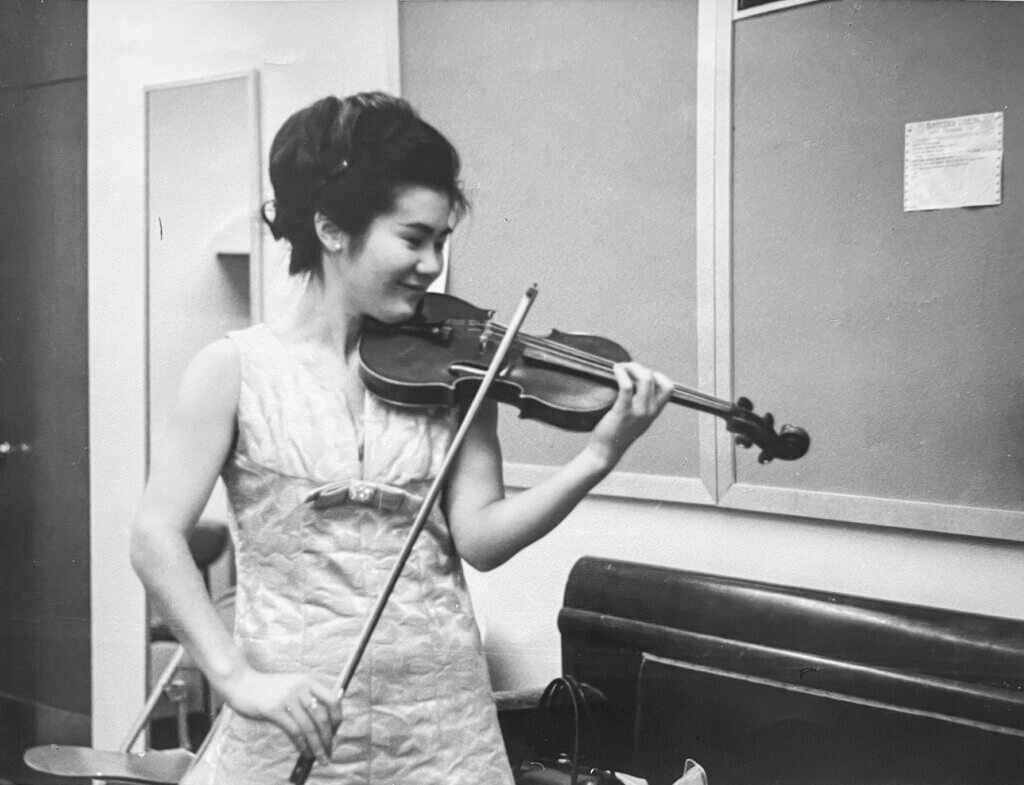
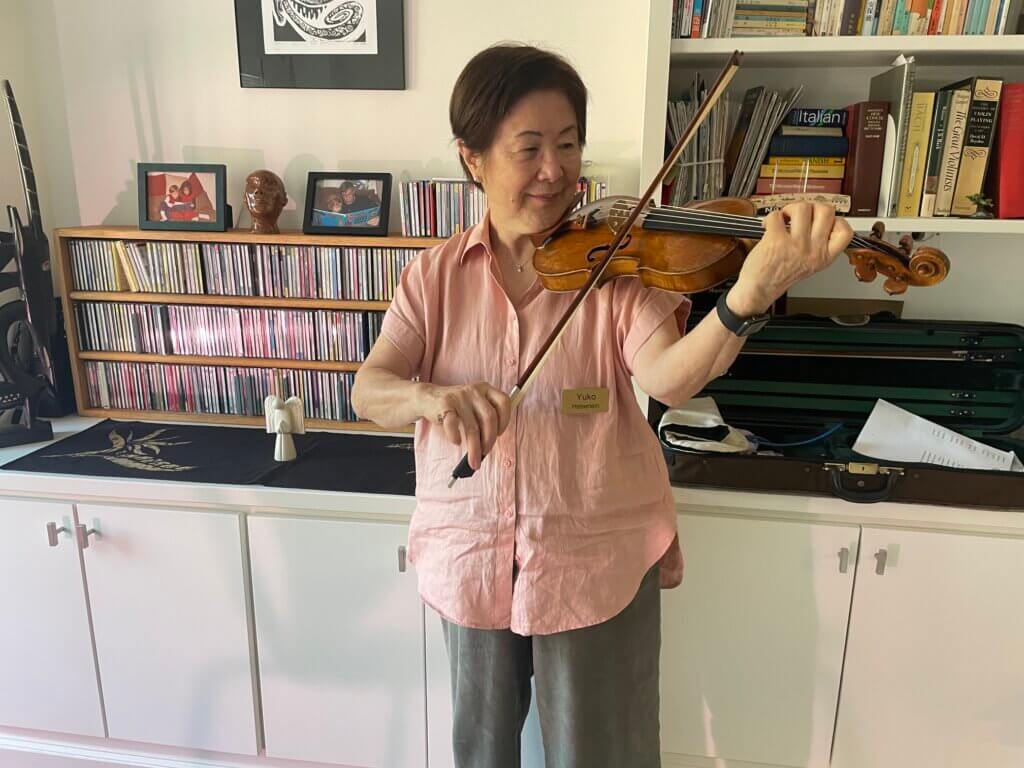
That determination first brought her across the Pacific. Heberlein arrived in the United States in the 1960s to study classical violin at the University of Minnesota. She did not come looking for romance or even permanence. She came because music had become her language, her way of finding a voice after childhood hardship.
She knew little English. Minnesota winters were unlike anything she had imagined. Yet she remembers her first year with unmistakable delight: “I felt so liberated.”
A Japanese proverb became something of a compass: “A frog in a well knows nothing of the great ocean.”
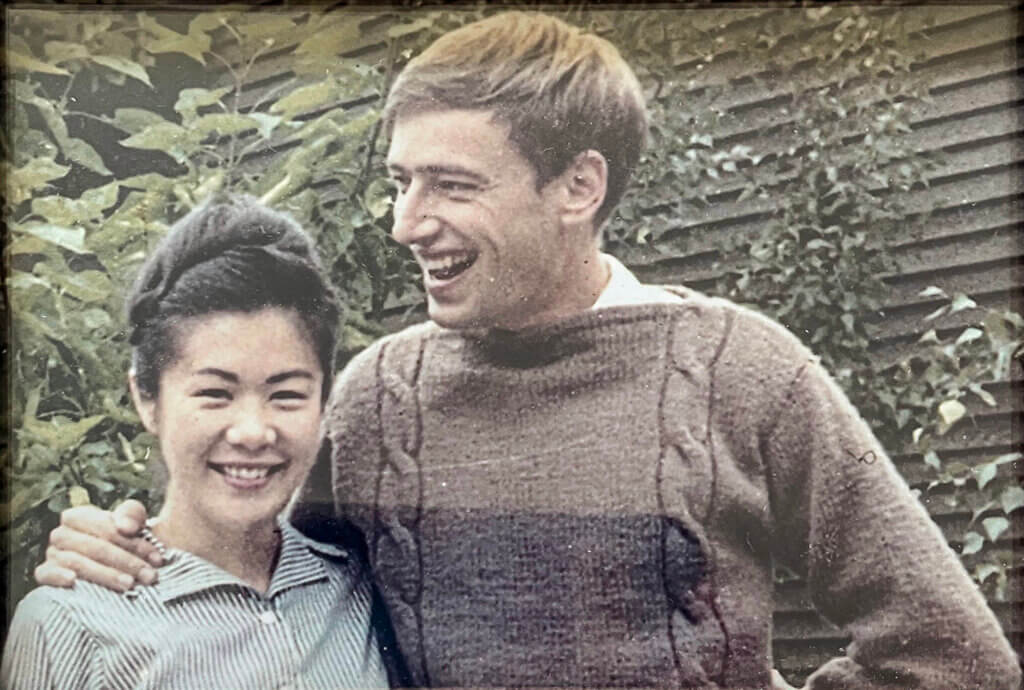
In 1967 she met another foreign student, German physicist Joachim “Jockel” Heberlein. Like hers, Jockel’s childhood had been shaped by war, hunger, and loss. They married, raised two children, and built what she describes as a life filled with curiosity and adventure.
They camped throughout the American West, explored Canada, traveled to six continents, and returned each time to their beloved home on Minnesota’s Lake Gilfillan. Their daughter Andrea became a neuroscientist and professor at Boston College. Son Marcus eventually settled in Japan with his own family. The future seemed full of grandchildren, travel, and new adventures.
A stunning turn
Then came the diagnosis that changed everything. Amyotrophic lateral sclerosis or ALS: a progressive, fatal neurological disease. As Jockel gradually lost the ability to care for himself, Heberlein assumed every responsibility. Each day demanded more physical strength, more emotional endurance, more patience.
“My stage experiences taught me to stay in touch with myself,” she writes in her book. “Jockel’s caregiver was my new role to perform.”
When Jockel died in 2013 at 74, after 46 years of marriage, her grief was compounded by guilt.
“He died loving me,” she says. “He knew he was loved. But he died with regrets for what this all did to me.”
She carried regrets of her own. Exhaustion had sometimes given way to anger. The relentless demands of caregiving had left her resentful.
“I am human,” she says. “I had to take care of the remorse that I was imperfect as his wife, as a person. I was not OK after he died.”
Heberlein turned to solitude. Walking beside Lake Gilfillan, surrounded by the landscape she and Jockel had loved together, she began reflecting on her life. Eventually those reflections became words.
“I am not a writer,” she remembers thinking. “I am a violinist.”
Still, she kept writing. For 11 years she wrote, revised, cried, and wrote again. Gradually, the narrative changed. Rather than seeing only loss, she began seeing the shape of an entire life.
“A rainbow,” she says. “An arc.”
New perspective
The title reflects Heberlein’s realization that her marriage was ultimately a beautiful journey framed by two forces beyond anyone’s control: World War II at its beginning and ALS at its end.
Writing “saved me,” she says. “It helped me heal.”
In her memoir, she acknowledges that Jockel could be emotionally reserved. There were parts of his childhood she never fully understood until their daughter interviewed him near the end of his life. “But,” she says, “not knowing is sometimes a blessing.”
Heberlein says Americans who have not experienced the ravages of war firsthand would struggle to comprehend them. “When everyone was living in misery,” she recalls of postwar Japan, “you had to be prepared for anything terrible to happen.”
Today, Heberlein has begun another chapter. Moving to Acton meant leaving behind a house full of books, albums, and memories. Downsizing was painful, but she was determined not to leave that burden to her children as they continued grieving their father.
Instead, she has embraced a new community at Newbury Court. She lives with music as her constant companion, listening to — and still performing — the works of Bach, Beethoven, and Brahms.
“I had to take care of my pain, but I need to keep living my life,” she says. “I think I always have a sense of me. I know who I am.”