Ease up on home air conditioning for energy savings and good health
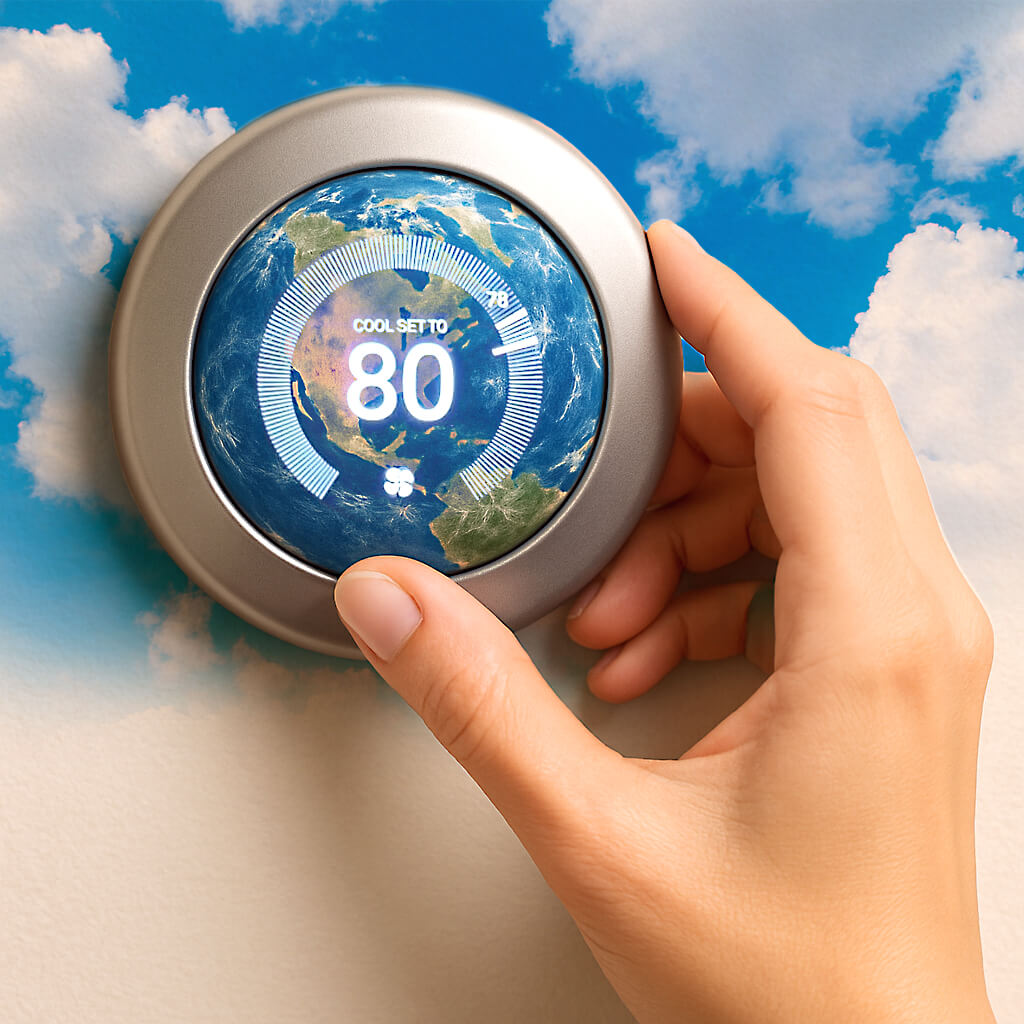
An indoor temperature of 80 is not unusual in other parts of the world — in Spain, it is the new legal mandate.
On June 24, Acton experienced a large power outage in the downtown area. A fuse was blown, which in all likelihood was caused by the heat wave that saw temperatures peak at 100 degrees, a 30-degree divergence from historical averages.
An email notification from the Acton Municipal Light Plant went out to residents, asking them to turn off all non-essential power sources until the peak demand abated. (If you are not on that list, you can contact CMLP.) Those of us with Nest thermostats, electric vehicles, and other connectible devices may also opt in to CMLP’s Connected Homes program, which will allow CMLP to remotely control power to some devices during peak hours.
Regardless of your choice to opt in or out of these programs, you would be wise to turn down your air conditioning. It will not only help us avoid blown fuses, but it will save you money and may even have some health benefits.
Next year, CMLP will be rolling out time of use (TOU) rates, which means that the price for electricity will increase during peak hours and decrease during non-peak hours. By shifting our power use, we can lower our bills and help keep our rates low. As ISO New England experienced power scarcity on June 24, the cost of power in the spot market at 8 p.m. reached $1,100 per megawatt hour, with a historical average of $50 per megawatt hour.
These peak power prices are not just a money drain. They draw from online “peaker” power plants that rely on oil or other dirty fuel. Long-term contracted power, on the other hand, can be selected from green suppliers like solar and wind, and other lower greenhouse gas feedstocks like hydropower, gas, or nuclear.
Staying indoors in the coolest possible temperature is necessary for the elderly or infirm, but for the rest, acclimatization is preventative against heat stroke, according to the Centers for Disease Control and Prevention. The agency advises workers to gradually increase their exposure to hot environmental conditions. An indoor temperature of 80 is not unusual in other parts of the world — in Spain, it is the new legal mandate.
When we reduce our power use during peak periods, our light plant will avoid exorbitant spot prices and thereby be able to continue providing lower rates. And if you reduce your consumption by turning down the dial on your AC, you may accrue some important health benefits, too.
The author is a member of the Acton Municipal Light Plant Board writing on her own behalf.