Fortitude at altitude: Acton native’s speed-focused Everest quest
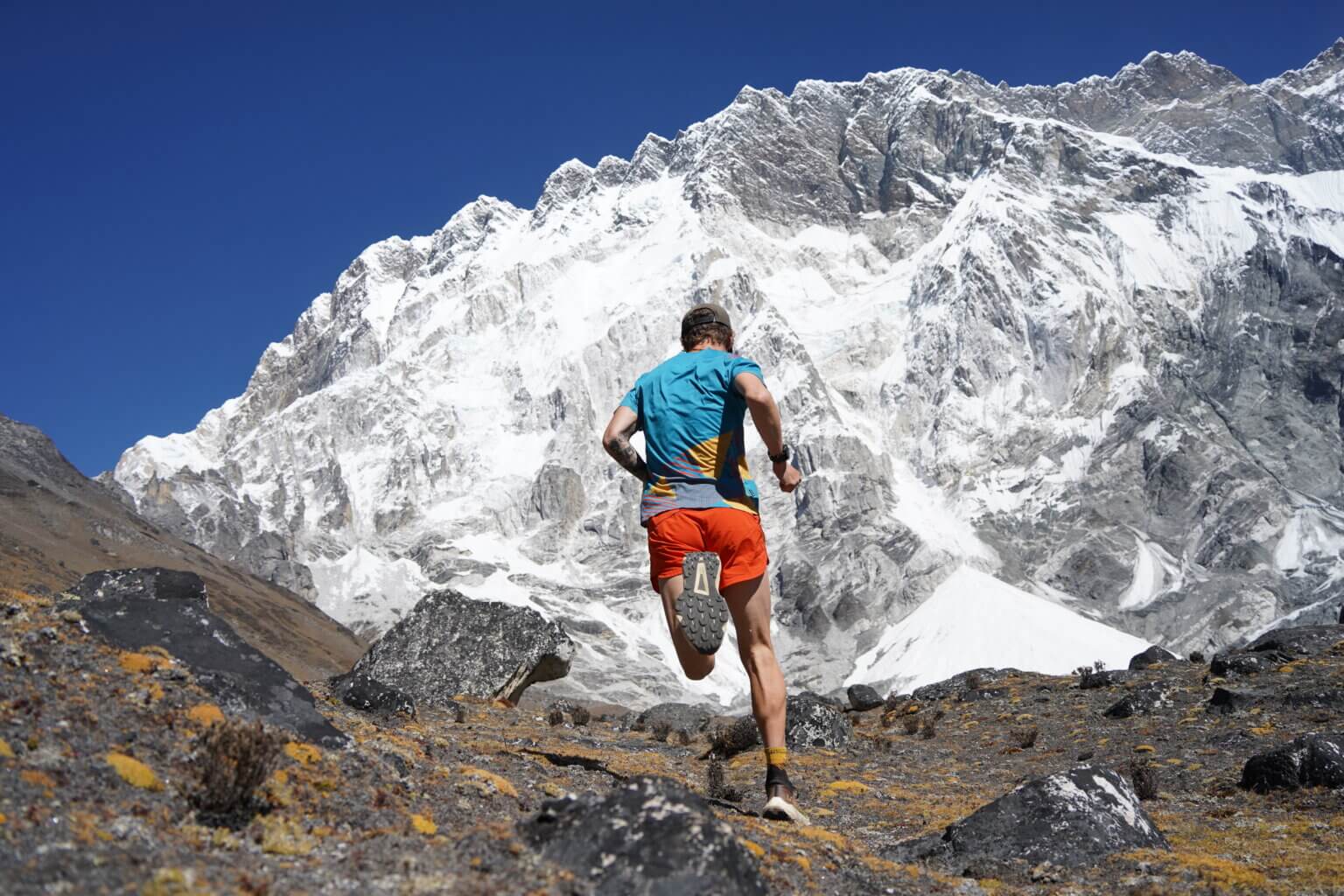
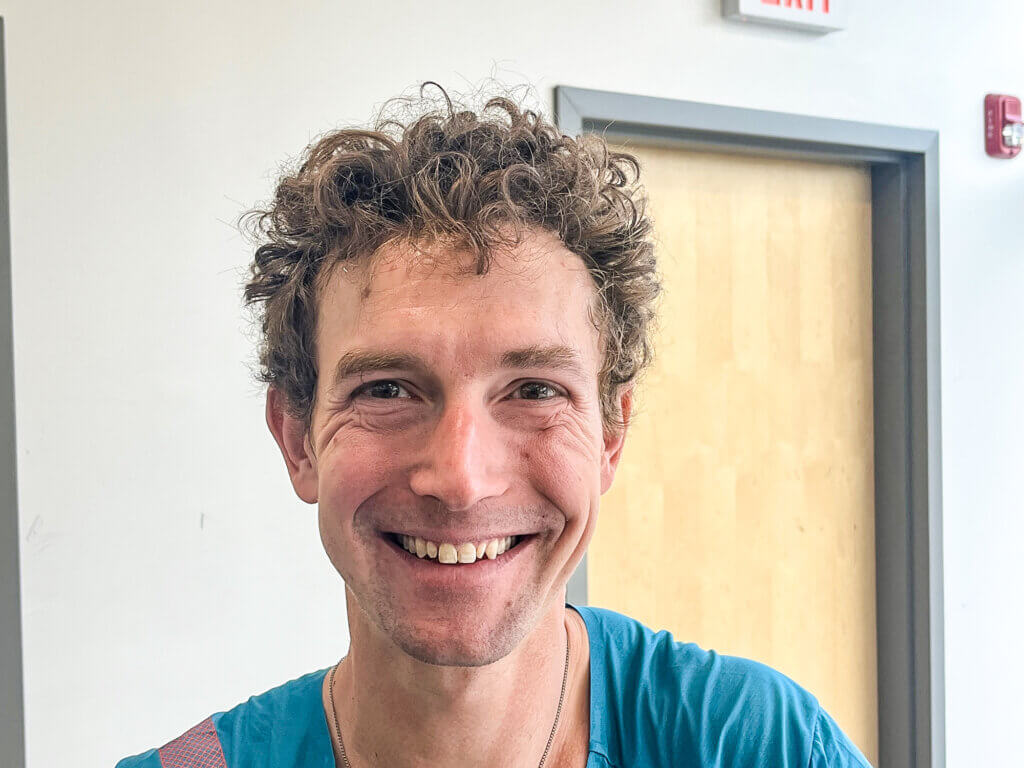
Tyler Andrews is hoping the sixth time is the charm.
Tyler Andrews is hoping the sixth time is the charm.
The 35-year-old Acton native is attempting to break the record for the fastest ascent of Mount Everest from the Nepal side of the world’s highest mountain without using supplemental oxygen.
“The record I’m targeting is Marc Batard’s 22 hours and 29 minutes from Base Camp to the summit, set in 1988 — so that record is older than I am,” Andrews said. “To put it in context, the fastest ascent ever with supplemental oxygen is 10 hours and 56 minutes, which gives you a sense of how much of a difference that bottled oxygen makes.”
French mountaineer Batard was the first to summit Everest in under 24 hours without supplemental oxygen.
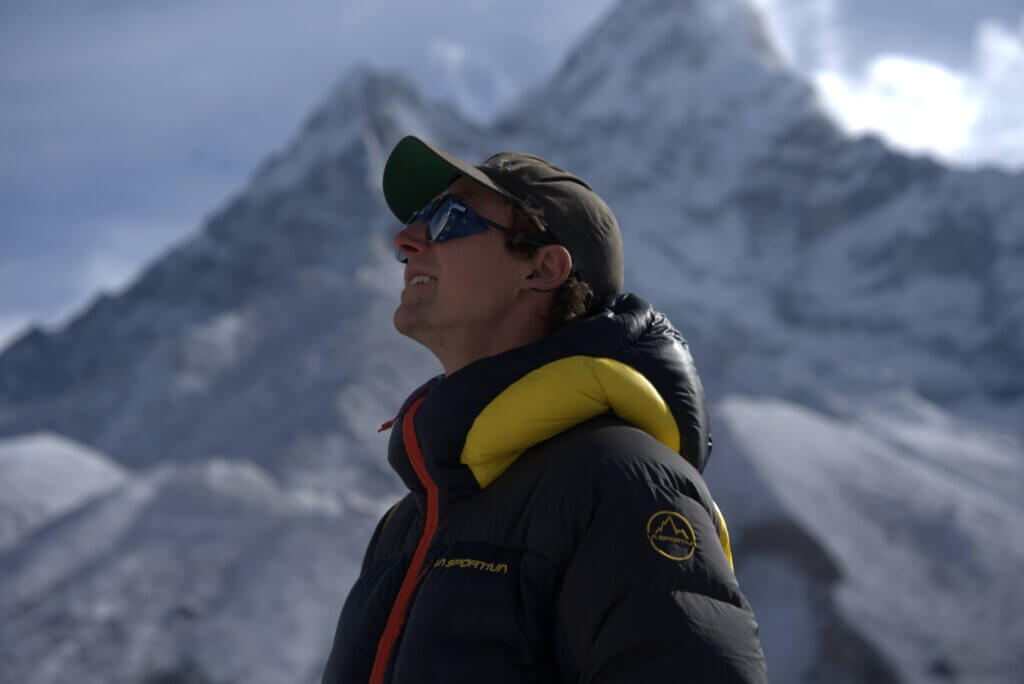
Andrews made five attempts at the record in 2025, falling short each time, with reasons ranging from encountering very deep, soft snow at about 26,000 feet — just 3,000 feet from the summit at 29,031 feet — to a broken zipper on a boot at around 23,000 feet on another attempt.
“At that altitude, a boot that isn’t closed is a frostbite situation,” Andrews said. “I wasn’t going to lose my toes for a speed record, so I turned around.”
A life-or-death episode
Andrews’ most harrowing challenge came on his fourth attempt last year, when he fell into a crevasse and had to extricate himself using an ice ax while dangling precariously from a climbing rope. A “roof” of ice had formed over Andrews’ head when his rope sliced through the overhanging snow above him.
“I had to let go of the ascender, take off my backpack one-handed while holding myself against the ice wall on my crampon front-points, get out my ice ax, lean back, and chip through the roof above me — being very careful not to accidentally cut the rope in the process, which would have sent me into the abyss,” Andrews said. “The whole ordeal took maybe 20 minutes.”
Andrews had gotten some ribbing for carrying an ice ax on Everest, because it’s almost never necessary. That day it was essential, he said.
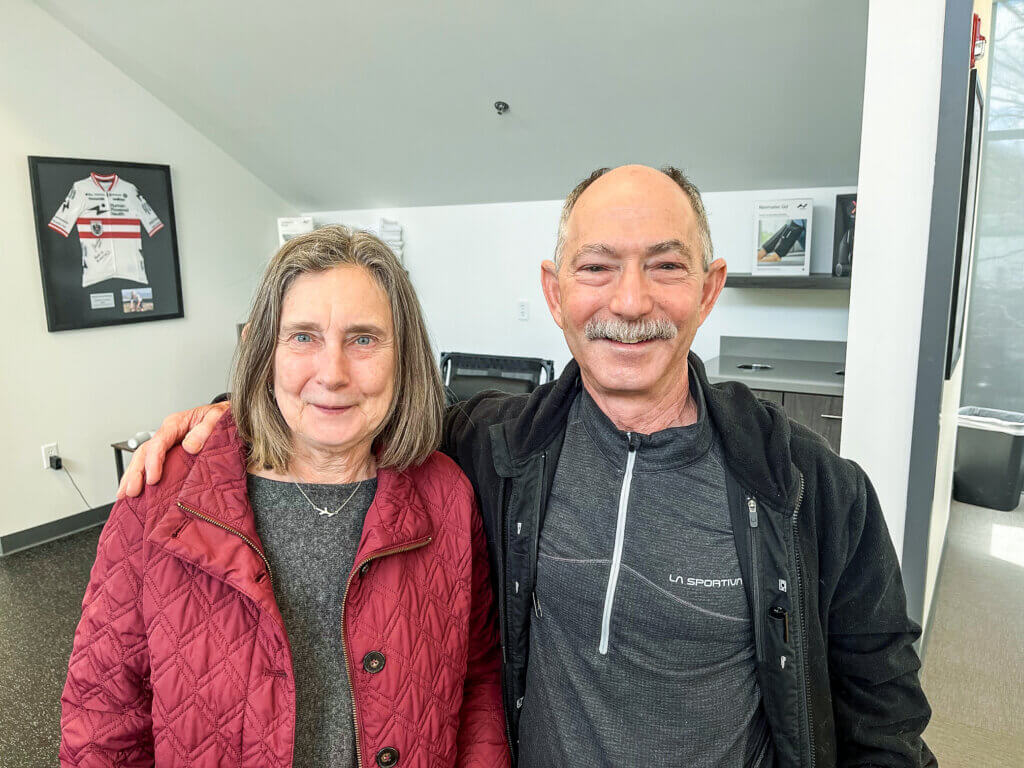
Growing up in Acton, Andrews showed early signs of stubborn determination, according to his mother, Valerie Cummings.
“He’s always been incredibly strong-willed,” Cummings said. “When he was a child, we tried to discipline him by saying, ‘OK, if you don’t stop that you’re going to have to give me that toy.’ He would say, ‘Fine, take it.’”
“Usually with kids you can escalate enough that they’ll stop,” said Tim Andrews, Tyler’s father. “Not Ty.”
An important mentor
Tyler Andrews credits Jon Waldron, the cross country running coach at Acton Academy, with setting him on the path to becoming a professional runner, marathoner, and ultra-marathoner, with speed records on other peaks, including Mount Manaslu in Nepal, the world’s eighth-highest mountain, at 26,781 feet. Andrews made that summit in 9 hours and 52 minutes without supplemental oxygen.
“Jon is probably the single most important part of my athletic journey, as he is almost singularly responsible for getting me started in running in high school,” Andrews said.
Waldron downplays his role, saying he nudged Andrews into a positive attitude toward running, but that Andrews took it from there.

“He had this idea there are good runners and bad runners and he wasn’t one of the good ones,” Waldron said. “I introduced this idea that was new to him that if you run more, you’ll improve, and improvement is the goal. For some reason that really resonated with him.”
Andrews now runs a non-profit, the Chaski Endurance Collective, that offers coaching and training to runners.
Extensive preparation
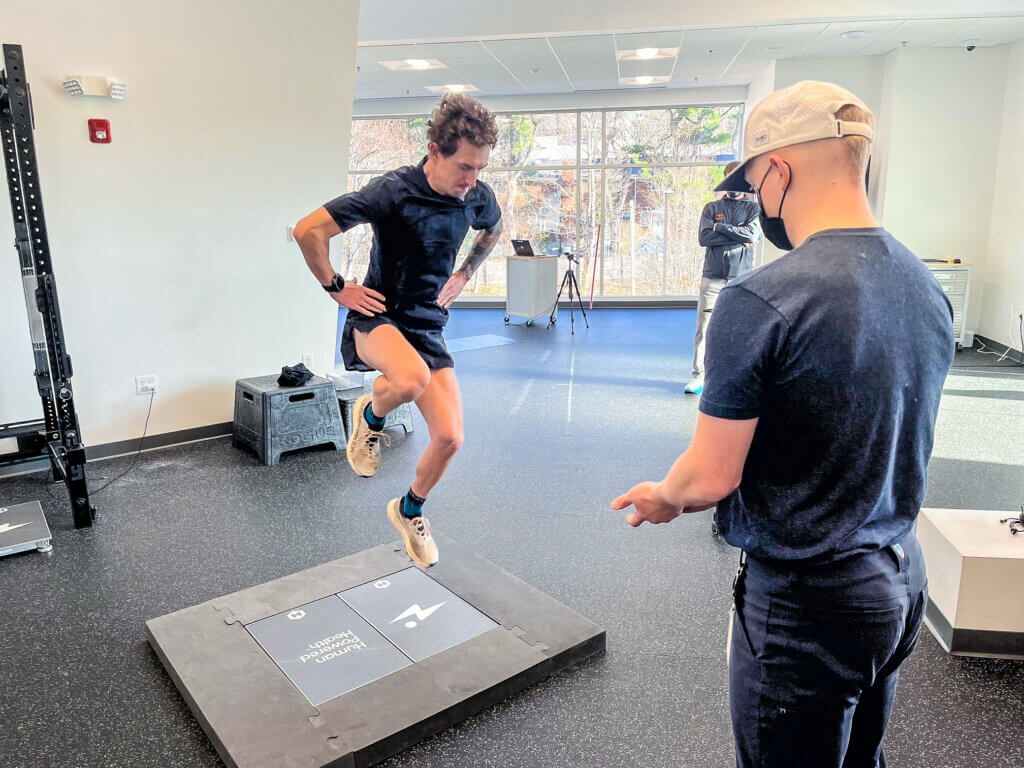
On the morning he was leaving for Nepal, on April 6, Andrews was at the Human Powered Health facility in Wellesley, running through tests to measure his fitness and strength. He had met with the physiologists at Human Powered Health four months earlier for guidance on his training regimen in Quito, Ecuador, where Andrews lives when he’s not circling the globe climbing mountains or visiting his parents in Acton.
The conditions in Quito are ideal, he said.
“It’s got a lot that I look for as an athlete,” Andrews said. “It’s at high altitude, about 9,000 feet. Because we’re right on the equator, the weather is mild compared to a similar altitude in Colorado. It never gets below 50 or above 75. It’s a hidden gem.”
Watching as Andrews ran at 6.5 mph on the equivalent of a 24% grade on a treadmill, Human Powered Health physiologist Evan Hoyt said fewer than 1% of humans could do what Andrews was doing on the treadmill.
“Most people can’t even walk what he’s just run up,” Hoyt said. “He not only has the body and the fitness of a professional athlete, he has the mindset that goes with it. He is an engineer, and engineers are problem solvers, and you can see those traits bleed over into his sport.”
Andrews has a degree in mechanical engineering from Tufts University, where he also ran track.
From Boston, Andrews had a flight to Tokyo. The next day he had a flight to Kathmandu, where a short helicopter ride to Base Camp would save him days of difficult hiking. He will spend about a month acclimatizing himself on other peaks before targeting an Everest summit between May 10 and May 25, depending on the weather.
In the meantime, friends and family will be on pins and needles.
“It’s challenging to do what he does,” said Tim Andrews, Tyler’s father. “It’s a dangerous activity. As we joke, it’s not as bad as being a Navy fighter pilot, but it’s dangerous. We don’t really care if he sets any records. We just want him to be happy. We encourage him. Kids have to do what they want to do.”