From Acton roots to sowing agrarian vitality in The Gambia
As a Peace Corps volunteer, my work here focuses on food security and sustainable agriculture, building on skills formed in Acton.
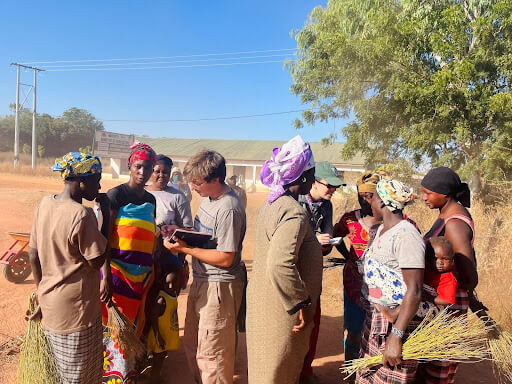
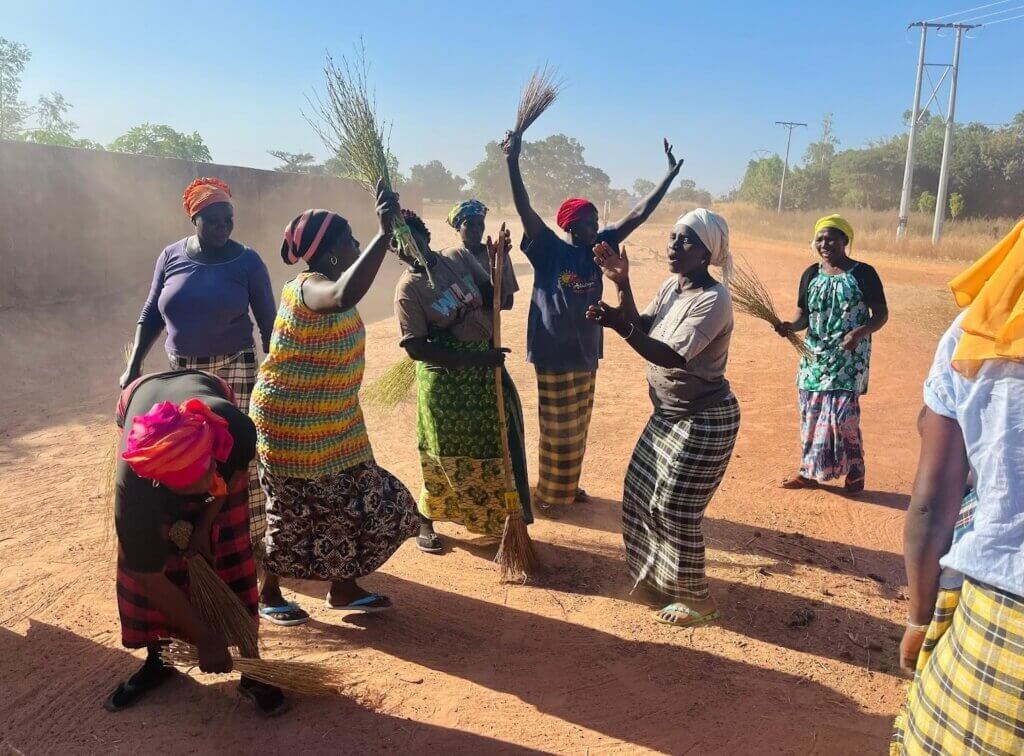
The familiar slosh of water rushing over onion beds is interrupted by a shout — “Oy!” I hear the crackle of flames before my head turns. My host mother, Kaddy, takes off running toward the tall bush grass engulfed in flames. Every woman in view joins, rushing toward the blaze.
“Jarra!” My host mother uses my Gambian name, directing me to haul water from the nearest well as a human chain materializes, pouring water into the next woman’s bucket. The blaze is over in minutes, and as the smoke clears I see children still untying horses and donkeys as the last embers are extinguished.
As a Peace Corps volunteer in The Gambia, I have learned to understand scenes like this, which go against my instincts in an emergency. My village’s livelihood is agriculture, and the women defend their crops accordingly. I live with a host family in a village of about 700 people in the country’s North Bank. My work here focuses on food security and adapting to environmental challenges through sustainable agriculture, building on ideas and skills formed in Acton.
Transatlantic echoes
Growing up, I was surrounded not only by farmland but also by our town’s history of civic responsibility and environmental stewardship. Sites like the Old North Bridge and The Robbins House tell the story of early America and resistance. During Peace Corps training, we visited Juffure, popularized in Alex Haley’s novel “Roots,” and its role in the transatlantic trade of enslaved people and abolition. It was powerful to learn history from a Gambian perspective and reflect on interconnected narratives of freedom and resistance across continents.
Across the street from Henry David Thoreau’s birthplace, I was inspired by both neighbors and neighborhood. My sisters and I wrote letters to our neighbor Elayna Tekle while she taught English in the Marshall Islands. Later, we learned about her brother David’s public health work with Peace Corps Nicaragua in a presentation at Holy Family Parish. At Gaining Ground, an organic farm fighting local food insecurity, the Farm Team program taught me about soil health while helping supply organic produce to local food banks and meal programs.
An inspiring mentor
During my years at Acton-Carlisle High School, earth science teacher Peter Nichol spoke about nature with wonder. His passion for protecting the environment and the joy of sharing it with others was infectious. He spoke often about his Peace Corps service in Mali and modeled a fierce belief in collective action and a community’s ability to make strides in the climate crisis.
In Green Team, we worked on compost adoption at CCHS, milk carton recycling, and carbon footprint reduction through the Cooler Acton initiative. We ate chips and salsa before school, and Mr. Nichol thought no project or idea was too big. Green Team members spoke at Town Meeting to ban polystyrene, and for Earth Month, we visited elementary schools to engage students on composting and soil health.
Years later, I remain optimistic about a community’s ability to create change. The Gambia has two seasons, rainy and dry, and climate change has cut the rainy season to three months, placing enormous strain on water access and crop yields. Unlike New England, there is little temperature variation, and decades of deforestation from illegal logging have intensified drought, erosion, and heat.
Potatoes, onions, and attaya
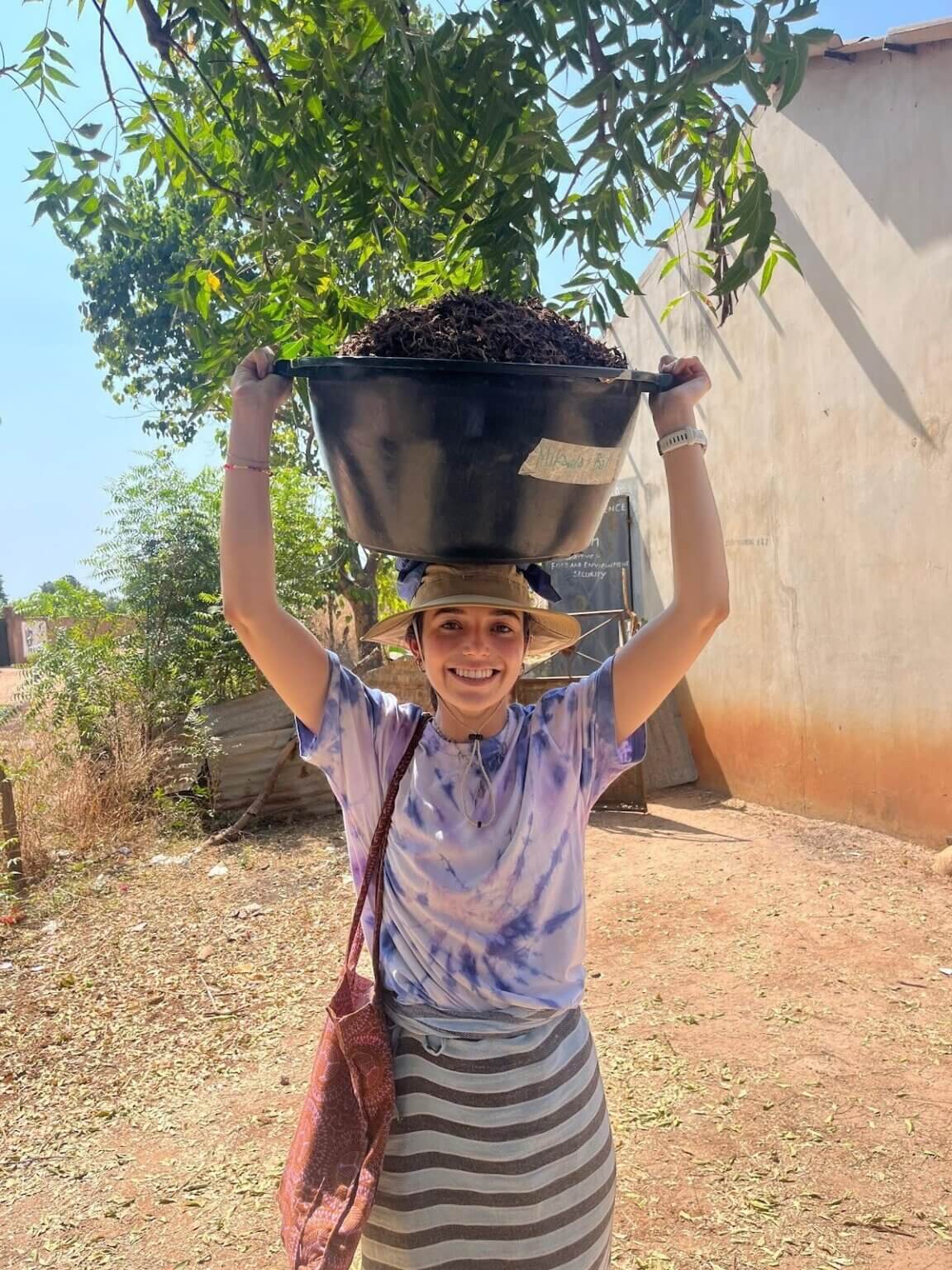
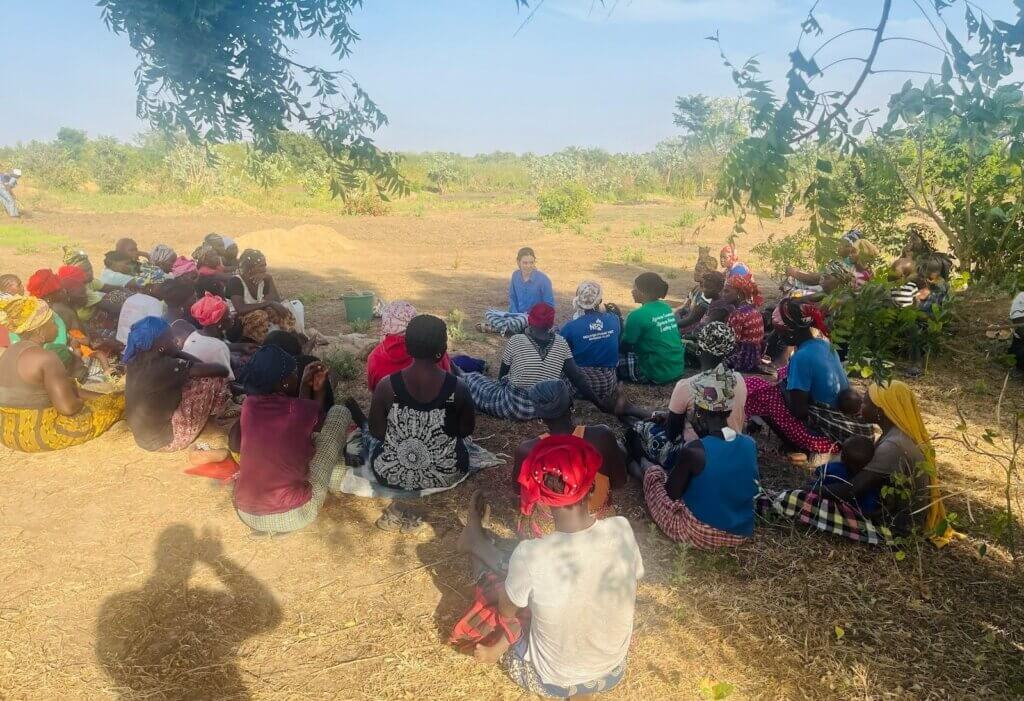
The Peace Corps is partnering with the Gambian Ministry of Agriculture to introduce propagation of the Irish potato, a resilient crop widely grown in Senegal but not yet common in The Gambia. Alongside the women of my community, we established potato beds in community gardens and at the local school, with the goal of reducing reliance on imported food.
We are in onion production season right now, and the women in my community often gather to transplant a single woman’s nursery together. Transplanting onions is time consuming, and these afternoons accomplish what would take an individual many days. These communal efforts often include music, dancing, and attaya, a sweet green tea brewed over three rounds — a process highlighted by conversation. Sugar is added between each round and the thick beverage is poured between glasses until it’s dark, strong, and foaming. The ritual emerges in the garden during the hottest part of the day, when harsh temperatures grind work to a halt and crops are guarded from animals grazing for sparse vegetation.
Whether it is coming together to put out a bush fire or transplant onions, I have found a piece of home in my village’s commitment to land and community.
Mikaela Smith is a class of 2017 graduate of Acton-Carlisle High School. She began her 15-month Peace Corps service in The Gambia as a food security and nutrition facilitator in early October 2025. Views expressed are entirely her own.