Next Gen: Embracing my multidimensional self
Some of the most innovative people are those willing to make connections between different disciplines.

High school often feels like a race to figure out who you are. Usually, it starts with small comments:
“Oh, she’s really into STEM.”
“He’s more of a humanities person.”
“She’s artsy.”
At first, these labels seem harmless. But over time, they can start to influence the way people see themselves.
A lot of students begin high school believing they need to find one thing they are good at as quickly as possible and build their entire future around it.
Part of this pressure comes from college admissions culture, where students are often encouraged to develop a clear “spike” or narrative. Part of it comes from wanting certainty. At 16 or 17, having a single obvious path can feel comforting.
Eventually, it can start to seem that being well-rounded is a weakness, as if exploring too many interests means you lack direction rather than having curiosity.
I used to fall into this trap, too. I assumed success meant choosing one path early and sticking to it. Over time, I realized that the most formative experiences I’ve had during my time at Acton-Carlisle High School had very little to do with each other on paper.
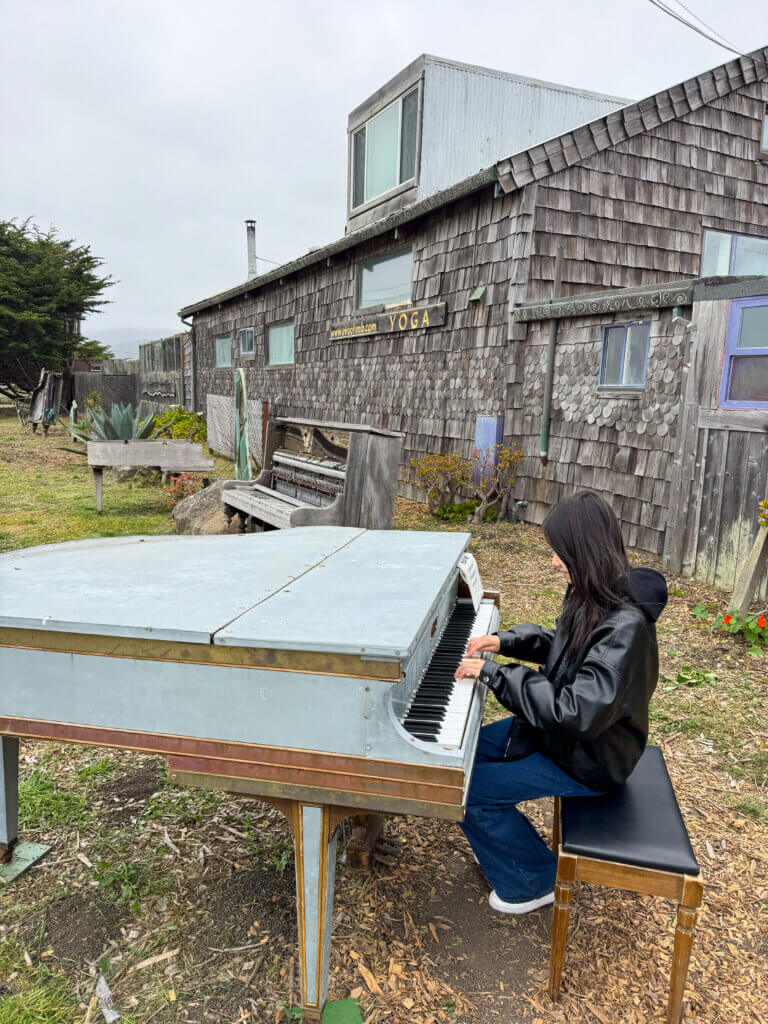
I spent time writing articles and interviewing people for journalism assignments — while taking advanced math classes that required a completely different way of thinking. I became interested in media literacy and communication — while also researching biometric systems powered by artificial intelligence. Outside of school, I played piano and pursued creative hobbies that felt far removed from academics.
For a while, I treated these interests like competing versions of myself. I assumed that eventually I would have to choose between STEM and the humanities, as though the two could not meaningfully coexist.
Eventually I stopped seeing my varied interests as contradictions. There’s something limiting about these labels in general, even if they seem harmless at first.
Pitfalls of pigeonholing
Reducing people to one defining trait often overlooks nuance. But what’s even more harmful is when students begin internalizing those labels. Some of the most innovative people are those willing to make connections between different disciplines. In reality, people are far too complicated to fit neatly into one category.
This is especially important to remember now, when there’s so much emphasis on specialization. Students are encouraged to plan everything early: future careers, majors, internships, long-term goals. Sometimes it feels as though every hobby or passion must connect to some future outcome. If something doesn’t contribute directly to a future résumé or career path, it can feel unnecessary.
But reducing every interest to its usefulness misses the point of exploration.
Delayed benefits
Some of the experiences that stay with you most are not always the ones that seem immediately useful. At the time, different interests can feel disconnected, almost random. But later, you start noticing small ways they inform how you think and feel.
Maybe conducting a journalism interview changes the way you view the world. A math class influences how you solve problems. A creative hobby teaches you patience or confidence in ways you never expected. Sometimes the value only becomes visible much later, often in ways you could not have imagined at the time.
Uncertainty is not failure. You do not need one fixed identity at 17 years old. You are allowed to outgrow old activities and discover new ones. You are allowed to enjoy subjects that seem unrelated. You are allowed to change your mind — even in college, even afterward. Some of the most meaningful growth happens when you explore interests simply because they interest you.
Looking back, one of the most important things CCHS taught me was not what specific kind of person I wanted to become, but that I never needed to become just one thing in the first place.
Sarafina Zhang will be attending Columbia College.
All views expressed are those of the author.