Time Outdoors: Magical memories of fireflies
Though entomologists can show us graphs and charts, most of us know we see far fewer today than when we were kids.
Some of nature’s species elicit more interest and excitement than others.
Each has its role — no less important than another in the natural order of things — but some are just more intriguing. And some are seasonal. Peepers in the spring. Cardinals in winter. Wild turkeys in the fall.
When I think of summer, no species is more emblematic than fireflies.
For me, seeing them awakens childhood memories. Of time with cousins and summer friends. Of innocence and fun. Of tables laden with watermelon slices and kids yelling and laughing in the gathering darkness, running barefoot on freshly cut grass. July Fourth decorations, deviled eggs, and sparklers.
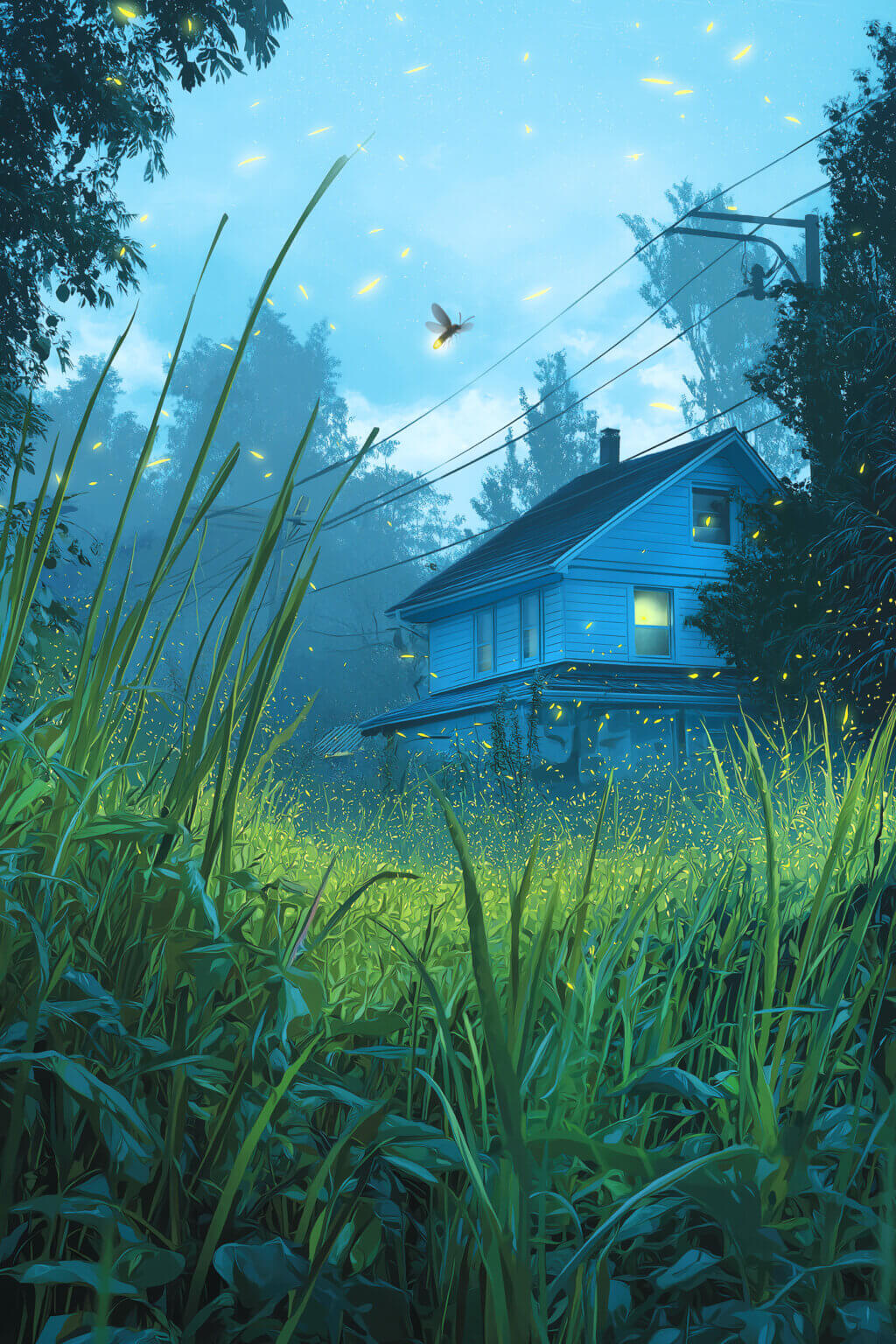
As night falls, their flashes seem to appear from nowhere and move and then re-appear — like nature showing off some ancient wizardry of the woods, reminding us that magic still exists.
Flying, flashing… fewer
The blinking bioluminescence we see is how male and female fireflies communicate with each other, a part of their mating process. The adult males do most of the flying and flashing, using specific, repeating patterns to “dialog” with females, who watch and blink back from branches and twigs, if they are interested.
To generate light, these amazing insects combine luciferin, luciferase, and a nucleotide that energizes cells and then mix in oxygen from their breath. They “charge” their bodies and can vary the pattern and brightness of the flashes. The light is “cold light” — 100% efficient — with all the energy going toward light production and none lost as heat. By comparison, an incandescent light bulb is only 10% efficient. Remarkable.
In fact, they are not flies but “soft beetles” of the family Lampyridae, and there are over 2,400 species worldwide, found on every continent except Antarctica. Here in New England, the species we see is Photinus pyralis, aka the common eastern firefly.
But fireflies are in trouble. In the U.S. and Canada, there are over 250 species of firefly, and, according to a 2021 report by The Xerces Society, 18% are threatened with extinction, and only about 30% are classified as “least concern,” with healthy populations.
Though entomologists can show us graphs and charts, most of us know we see far fewer today than when we were kids. I do. In fact, I have only seen a precious few in my years of living in Acton. These days, most fireflies I spot are in the deep woods, away from homes and lawns. And there is a good reason for this.
Problematic pesticides
Because fireflies spend the first two years of their life cycle underground, as eggs, larvae, and then pupae (before emerging briefly as the flying adults we see, to mate), they are particularly susceptible to popular “neonic” lawn pesticides that are spread as pellets and then soak into the ground when it rains.
Neonics are 1,000 times more toxic to insects than DDT was, and yard “treatments” play a big role in the decline in fireflies. Habitat loss and other factors also contribute, but yard pesticides are a big driver. Once a property is treated, these chemicals can last 1,000 days in the soil. Nasty stuff.
Light pollution also harms fireflies by disrupting their “mating dialog” of flashes. Artificial lights at night are now so pervasive that 80% of the U.S. population can no longer see our Milky Way galaxy in the night sky.
Female fireflies also depend on tall grass as effective perches for spotting blinking males. Obviously, most of the 40 million acres of lawn in the U.S. is devoid of the tall native plants that fireflies use to help complete their life cycle.
You can help
Fortunately, helping fireflies is relatively easy. By not using pesticide lawn treatments and by turning off outdoor lights when you are not using them, you can make a big difference. It’s that easy. If you can devote a section of your property to “rewilding,” even better.
Fireflies are so beloved that several organizations exist to solely help educate people about their decline and provide conservation tips and techniques. Firefly.org is one I like (and the easiest to remember).
Summertime childhood memories that involve nature and fun and running free are good memories to have. Worthy of passing on. Fireflies were a part of mine, and if they were a part of yours, too, I hope you will help to protect them so our children and grandchildren can also experience the simple, inexplicable joy of seeing them. And making summertime memories of their own.
Wilson Kerr lives in Acton and is an avid outdoorsman and amateur naturalist. This monthly column is written to help grow awareness of the wonders of nature. In this increasingly fast-paced and technology-packed world, it is important to stop and take in the beauty of our area and the animals that inhabit it. The author hopes this column will be read by families and used as a teaching tool and that you will spend more … Time Outdoors.