Time Outdoors: Majestic, marvelous maples
Sugar maples might look similar to other leafy, deciduous trees at a glance, but they have distinct traits and characteristics.
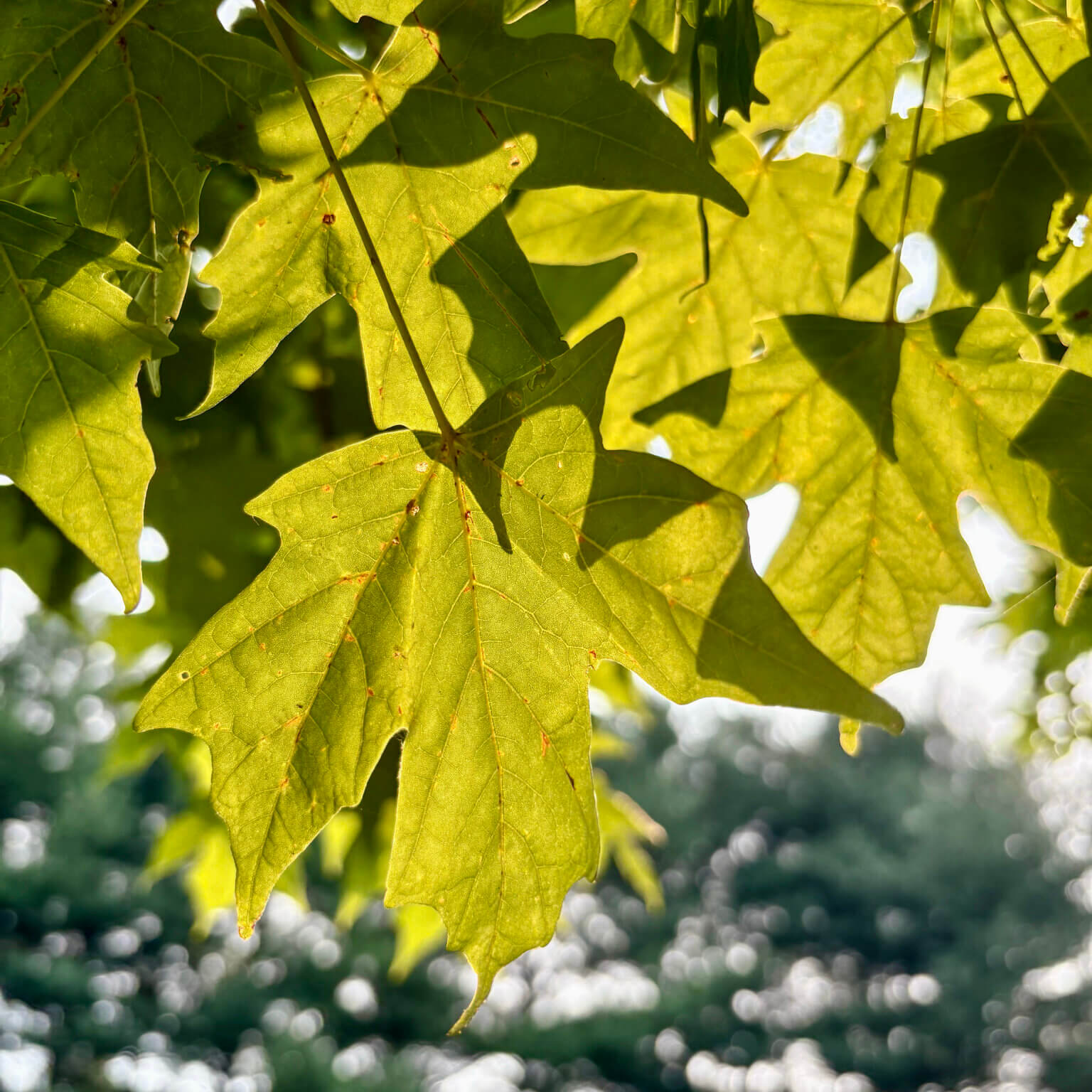
The other day, I found myself idly looking at the trees in our neighbors’ yard and started thinking about how easily we tune out these miraculous, essential parts of the natural world. Three large sugar maples rise majestically like sentinels. They are full and healthy, and I know they are loved.

On any given day, each of us probably sees thousands of similar-looking trees as we go about our busy days, and I’m guessing most of us take their vital role on planet Earth for granted. As “higher-order” species — with our large brains, mobility, and complex social structures — we tend to think of ourselves as somehow above a lowly tree. A deeper look at these organisms reveals surprising complexity and evolutionary prowess, not to mention a vital, highly consequential connection to what sustains nearly all life on Earth.
Sugar maples are but one of an estimated 73,000 species of trees, and though they might look similar to other leafy, deciduous trees at a glance, they are unique, with distinct traits and characteristics.
Nature’s solar panels
Each mature sugar maple might have 100,000 leaves, each a symmetrical miracle of design and form. Operating like miniature solar panels, they harness energy from the sun, use water pulled through their roots, and take carbon dioxide from the air to create glucose as fuel for their tree’s growth. Chlorophyll is the verdant, green pigment we see on leaves that absorbs light energy, the basis for this amazing, life-sustaining energy collection and conversion process called photosynthesis.
Lucky for us, the unused byproduct of photosynthesis is oxygen, released through microscopic pores called stomata on the underside of each leaf. Large sugar maples quietly produce an astonishing amount of life-sustaining oxygen — roughly 200 liters each day. Together, our neighbors’ three trees generate enough oxygen every 24 hours to fill 300 two-liter soda bottles.
This prolific arboreal output helps explain why the Amazon rainforest is often called “the lungs of the planet.”
Autumn leaves
As the weather cools each autumn, sugar maples stop producing chlorophyll, allowing the yellow and orange pigments already present in the leaves to become visible. The leaves then dry up and fall off to help the trees shed moisture, reduce wind drag, and prepare for the dormancy of winter. These fallen leaves decompose into soil that feeds the tree and others around it.
While many New Englanders rightly associate maple trees with autumn’s brilliant orange, red, and yellow foliage displays, most probably don’t realize that sugar maples also flower in the early spring and, along with dandelions, serve as one of the season’s first sources of pollen for emerging honeybees.
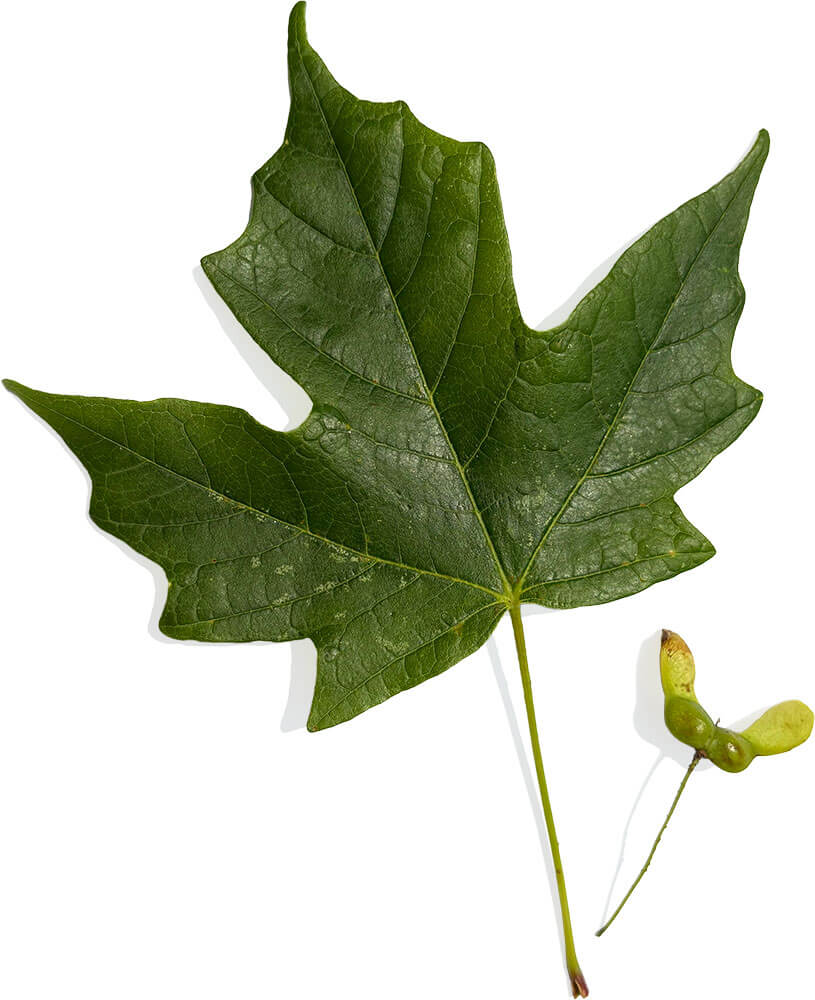
Sugar maples produce “spinners,” seeds equipped with papery wings. Each autumn, they harness the wind to “fly” seeds up to 300 feet away, so new trees will not compete for light and water. Over millions of years, natural selection favored trees whose seeds flew farther and more efficiently, gradually perfecting their remarkable autorotation. Remarkable.
And, of course, the sap of sugar maples can be collected in the early spring and boiled down at a 40:1 ratio into real maple syrup. Maple sap is loaded with naturally occurring electrolytes, minerals, and antioxidants.
Maple wood is highly durable and prized for its swirled grain and creamy caramel color. It is considered a “hardwood,” making excellent floors or cutting boards and other applications where wear and tear is an issue. Baseball players know maple well. Its strength makes it the wood of choice for many Major League bats.
Family trees
Sugar maples can live hundreds of years, and an increasing body of evidence suggests that they also “communicate” with other trees by way of underground “mycorrhizal networks” of symbiotic fungi and plant matter that carry chemical signals when, for example, a tree is attacked by insects or under stress. Nearby trees can then mount preemptive defense measures.
While this is not communication in the same way we think of it, it is no less miraculous. In many ways, it’s more so. Trees can sense changes and warn and support one another.
The largest maple tree in an area is sometimes referred to as a “mother tree” and acts as a “central server,” sending chemical messages and sharing nutrients with others. For nearby offspring trying to grow in its shade, this assistance can make all the difference. It’s no wonder many Native American cultures viewed sugar maples as symbols of balance, generosity, and protection.
Long after everyone reading this is gone, the sugar maples across the way will likely remain. Perhaps they will tell stories of the little girls and boys who grew up on our street and moved away — and of some who moved back.
I hope these trees — these three magnificent sugar maples — know they are seen and appreciated. As sentinels. As wise. As vital, life-giving, oxygen-generating parts of our community.
Until next month, I hope you’ll choose another species of tree and discover what makes it just as extraordinary. At the very least, I hope you’ll raise a glass in gratitude the next time you pour maple syrup on your pancakes — and then head out to spend Time Outdoors with your family.
Wilson Kerr lives in Acton and is an avid outdoorsman and amateur naturalist. This monthly column is written to help grow awareness of the wonders of nature. In this increasingly fast-paced and technology-packed world, it is important to stop and take in the beauty of our area and the animals that inhabit it. The author hopes this column will be read by families and used as a teaching tool and that you will spend more … Time Outdoors.
July 20, 2026: This column has been updated.