Time Outdoors: The wonders of local farming
For a boy with a learning disability, grappling with his parents’ divorce, The Farm was a refuge of profound importance.
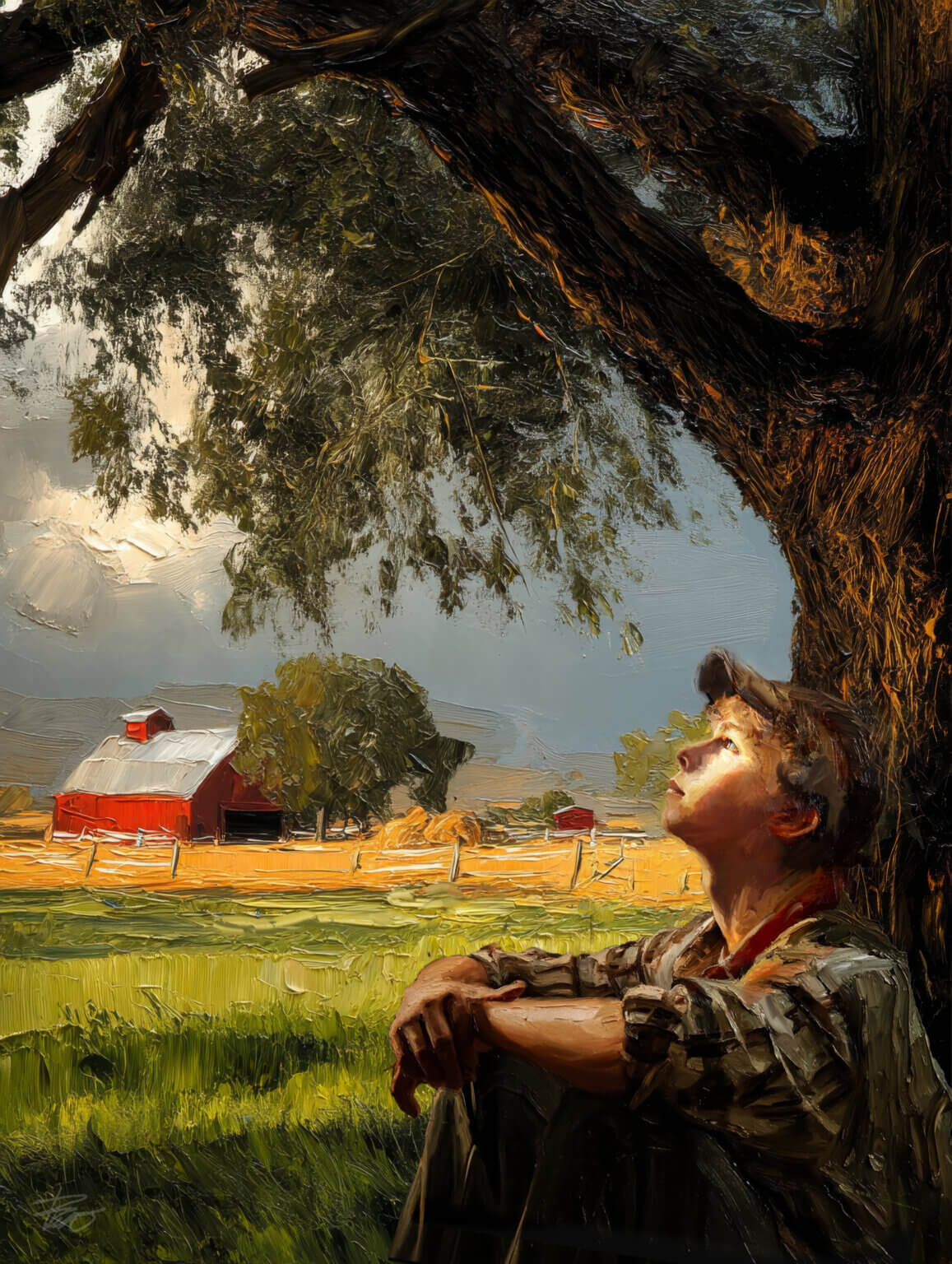
For a boy with a learning disability, grappling with his parents’ divorce, The Farm was a refuge of profound importance. I know this because my memories of it are crisp and unfaded 40-plus years later.
I can still move through each room of the farmhouse, walk down to the pond, or explore the haybarn. The colors are vibrant — the details sharp and exact, like a slideshow locked in time.
Waking up to the smell of bacon coming up through the heating vents. Rainy days spent perusing hunting and fishing catalogs in the cozy corner chair. Outbuildings filled with tools and equipment, including a red Farmall tractor I learned to drive at age 12. The rich, traditional aromas of gun oil and pipe tobacco. Heavenly.
Exploring the woods and fields of The Farm was where I first learned to harness my ADD as a superpower — seeing everything in nature, all at once. It was thrilling to apply this “disability” to the opposite effect.
The Farm was my Uncle Phil’s, in upstate New York, in a town called Eagle Bridge, not far from Bennington, Vermont. It was dairy cattle country — woodlots and cornfields.
Exploration and connection
I suspect farms play a role in early memories for many because they are wondrous places to explore and connect to the natural order of things. The seasons, the hard work, the rewards gathered in bushel baskets — all from the land. Animals raised for helping on the farm, or to be processed and smoked and stored.
Thankfully, most farms in the United States are still family-owned small entities ($350,000 or less in gross income), accounting for 41% of all agricultural land used. In Massachusetts, we have about 7,000 farms, at an average size of 67 acres.
But farming is hard. Our state lost 672 small farms from 2012 to 2022, according to a U. Mass agricultural census. Acreage used for growing vegetables dropped by 10%, and the number of organic farms in the state fell by 13% from 2017 to 2022. In better news, women are playing an expanding growing role, as over 100 became farmers in this same period.
Thankfully, Acton appreciates and celebrates its rich agricultural history. It persists every day on our 16 working farms. At over 1,500 combined acres, farming is the single largest commercial use of land in town — and all of it is protected from development. We are lucky to have these farming families.
Names like Barrett’s Mill, Brigham, Colonial, Gaining Ground, Hutchins, Kennedy, Verrill, Macone, Marshall, Millbrook, Rotondo, Saltbox, Scimone, Silferleaf, and Walden Woods are synonymous with fresh local veggies, eggs, honey, maple syrup, flowers, and other products. And up on the hill past the rotary, the Northeastern Correctional Facility’s 300-plus-acre farm provides training and employment for low-risk pre-release inmates.
Bolstering our neighbors
Supporting our local farms is important. You can join a Community Supported Agriculture (CSA) farm-share, shop at farmstand stores, and attend various seasonal events they put on. When you do, your dollars stay right here in town, helping those working so hard to keep doing what they do.
In 2006, Acton established the Agriculture Committee to “serve as a forum for matters of interest to farmers in Acton, and to advise the [Select] Board on how the Town can best support farming.” On May 15 at 6 p.m. committee members are co-hosting “Farming into the Next 250 Years: Climate and land challenges and solutions in Acton” at the Acton Free Public Library, 129 Main Street. This volunteer committee also organizes “Ag Day” in Acton Center each September.
Two-and-a-half centuries ago, it was the “embattled farmers of Acton” that put events into motion to free our young country from tyranny. Thankfully, this legacy lives on, embodied by the local farmers who still work the land (and our political leanings toward freedom and self-determination).
As spring roars into bloom, support local farming families any way you can. They are preserving open space, providing us with local produce, and passing on knowledge and respect for the land to their kids and grandkids.
And if you have a child struggling to learn, consider encouraging them to harness their superpowers outside the classroom with Time Outdoors. I am deeply grateful to my Uncle Phil and his farm for allowing me to discover mine, and to my dad for taking me there.
P.S.: May 18 is the annual Kids Fishing Derby at the Acton Rod & Gun Club, 74 Strawberry Hill Road), a free family event for kids 3-14 from 10-noon. Registration opens at 9 a.m. See you there.
Wilson Kerr lives in Acton and is an avid outdoorsman and amateur naturalist. This monthly column is written to help grow awareness of the wonders of nature. In this increasingly fast-paced and technology-packed world, it is important to stop and take in the beauty of our area and the animals that inhabit it. The author hopes this column will be read by families and used as a teaching tool and that you will spend more … Time Outdoors.