Time Outdoors: Tick, tick … boom
A new species of tick is headed our direction, and bring with them a health issue that deserves preemptive mention.
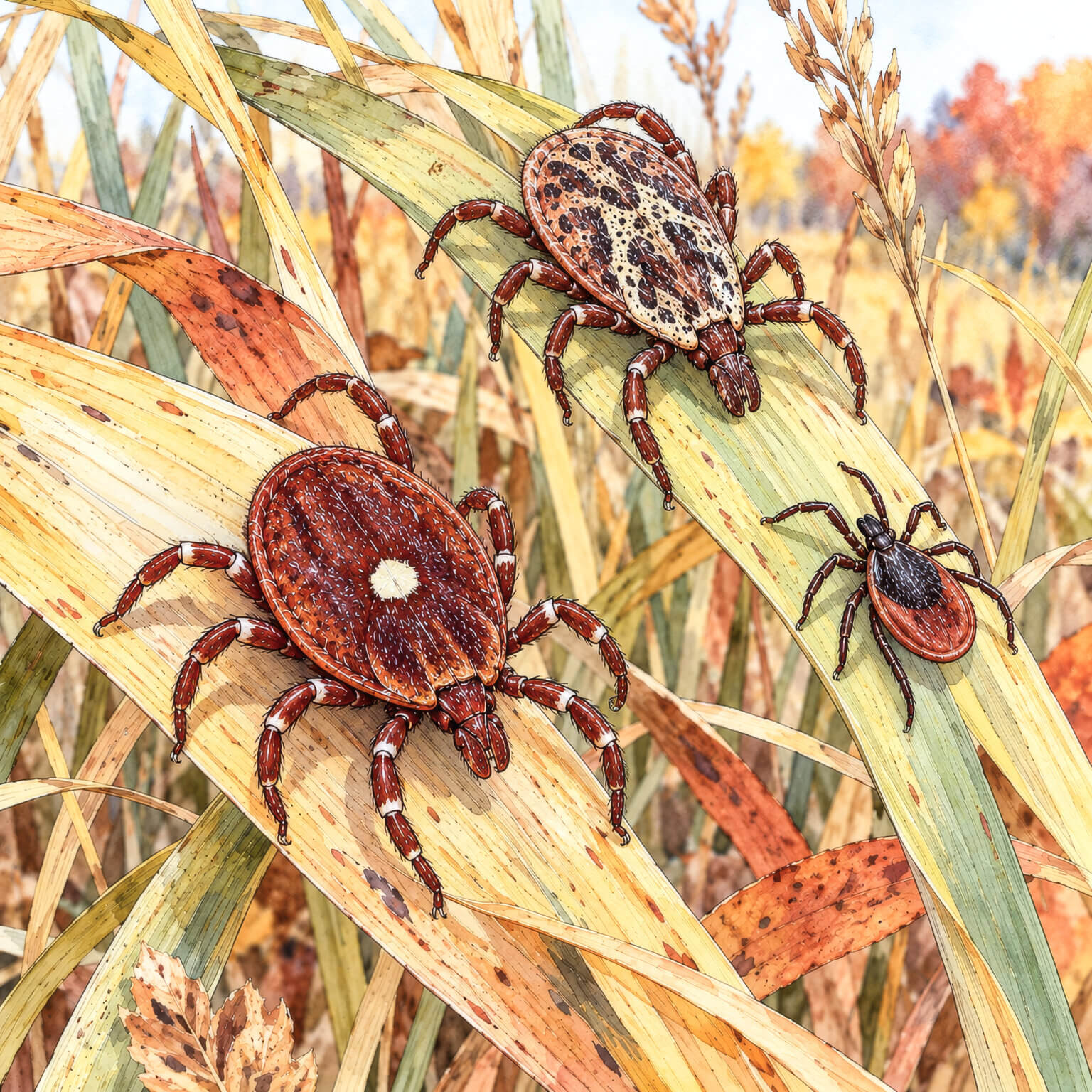
Most animals have a clear role in the natural order of things, occupying a niche in the web of life. Each is different. Some are large and cuddly, others small and slimy, but each has an interactive part to play, even if not obvious to us.

But rarely an animal comes along that elicits no such sympathetic understanding of purpose or place. The negatives seem so pronounced and overwhelming that any scant ecological upside seems like a stretch.
Personally, I would put ticks at the very top of this short list. These creepy crawly parasitic arachnids are so unpleasant that I have successfully avoided writing about them until now.
A new species of tick is headed our direction, and these little buggers bring with them a health issue that deserves preemptive mention.
Life cycle stages
There are hundreds of species of these blood-sucking mites on the planet, and most have four stages of their life cycle: egg, larvae, nymph, and adult. Ticks generally require a “blood meal” to move on to the next stage and will feed on any animal that happens by. Ticks do not jump. They use outstretched front legs to transfer onto a host, usually after waiting on vegetation. Their role seems to be as a food source for birds like wild turkeys and to thin out weakness by spreading disease. Scant upside indeed.
Locally, dog ticks and the smaller deer ticks are common. Deer ticks (black-legged ticks) can transmit Lyme disease and several rarer, more serious afflictions. Lyme should not be taken lightly; it can attack heart muscle.
I’m guessing we’ve extracted about a dozen from ourselves and our girls over the last decade. Thanks to nightly “tick checks” in summer and the occasional precautionary dose of doxycycline, none of us have gotten sick.
Most people I know are similarly “tick aware,” take precautions, and remove them quickly. We understand — and have learned to live with — the risks. For me, the rules of the game changed this year.
A first encounter
We have a modest “camp” on Martha’s Vineyard — a 1960s-built woodstove-heated house in the woods. Every spring I spend a weekend raking and doing maintenance, readying the house for summertime occupation.
Working outside this past May, I felt the telltale tickle of a tick crawling up my leg. But this little monster with a white dot in the middle of its body was moving with unfamiliar speed and purpose. A female lone star tick, the first I had ever seen.
Shocked, I went inside for a piece of Scotch tape (to entomb it for easy disposal) and a refresh of DEET. Over the next two days I found three more on me, each in similar circumstances. Yikes.
Lone star ticks are named for their distinctive marking, not for any connection to Texas.
Once common only in Southern states, lone star ticks have expanded northeast rapidly as temperatures have warmed. Far more aggressive than native dog and deer ticks, they have essentially taken over Martha’s Vineyard. They’re established on Cape Cod, too, and it’s probably not long before they’re here.
The reason for concern is that a single bite from a lone star tick can trigger a health condition called alpha-gal syndrome — for which there is no known cure or treatment. The symptoms of this allergy to red meat can vary, with some people also sensitive to dairy.
Understanding alpha-gal
Loren Erickson, Ph.D., writes on the “Immunology Explained” website that “Alpha-gal — short for galactose-a-1,3-galactose — is a sugar found on the cells of nearly all mammals except humans. Because our bodies do not make alpha-gal, the immune system normally sees it [as] harmless.”
A lone star tick bite can change this.
“During the bite, substances in tick saliva including alpha-gal and other immune-modifying molecules can shift the immune system toward making IgE antibodies against the alpha-gal sugar. Instead of ignoring alpha-gal, the immune system begins treating it as a threat,” Erickson explains.
This can trigger a systemic allergic response to mammalian meat that can be dangerous. Uncomfortable and life-changing, at the very least. On the Vineyard, there were just two cases of alpha-gal in 2020. In 2025, there were 742. Nationally, an estimated 450,000 people are now dealing with the condition.
Deer are a vector, and their overabundance locally will add fuel to this fire. It’s no coincidence that the Vineyard has very high whitetail densities. Recent regulation changes to extend archery and primitive firearms hunting seasons will hopefully reduce deer numbers — and ticks.
Staying safe
Prevention is key, and treating outdoor clothing with permethrin (after reading the instructions carefully) is effective and safe. Check yourself and your kids after being in tick habitats, and remember that not all ticks will make you sick. Having a company douse your property with chemicals might seem tempting, but this can have ecological and potential health downsides that far outweigh any benefits.
Spending time outdoors exposes you to all the animals in the web of life, including some with scant redeeming qualities. They have not arrived yet, but lone star ticks are coming, and it’s important to be informed and prepared.
Views are the author’s.